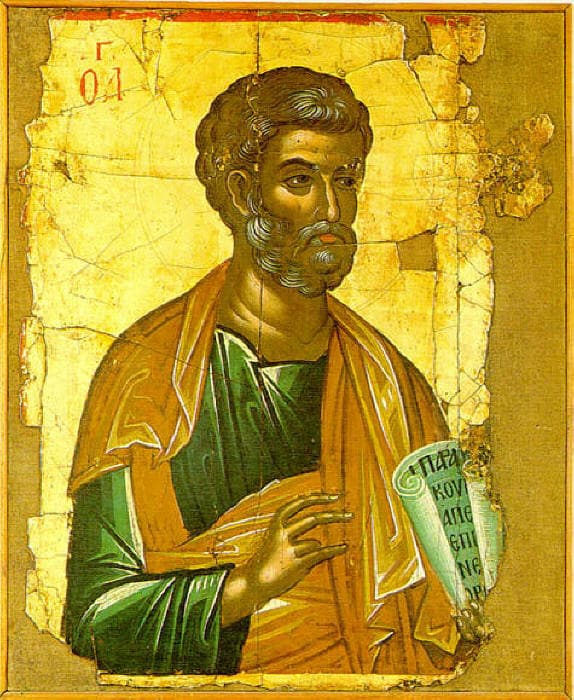
Saint Peter the Apostle.
Also known as Apostle Peter, Saint Peter the First-Enthroned, Peter the First-Called, Cephas, Simon Peter, Simon son of Jonah, Peter the Fisherman, Prince of the Apostles
Chief of the Twelve Apostles, Peter confessed Jesus as the Son of God and became the foundational leader of the early Church. He was crucified upside-down in Rome under Emperor Nero, and remains venerated as a pillar of Apostolic faith.
Tone 4
First-enthroned of the apostles, teachers of the universe: Entreat the Master of all to grant peace to the world, and to our souls great mercy!
The Rock
and Foundation of the Apostolic Church
Simon Peter, born in the fishing village of Bethsaida near the Sea of Galilee, encountered Jesus and was renamed Peter - "the Rock" - because he would become the foundation of Christ's Church. Though he stumbled through denials and doubts, Christ's grace transformed him into a bold proclaimer of the Gospel. He led the Jerusalem community, established the church in Antioch, and ultimately sealed his faith with martyrdom in Rome.
Early years
The divinely-blessed Peter was from Bethsaida of Galilee. He was the son of Jonas and the brother of Andrew the First-called. In the synoptic gospels, Peter (then Simon) was a fisherman along with his brother Andrew and the sons of Zebedee, James and John. His early life was ordinary, rooted in the daily labour of fishing the waters of Galilee. However, Simon's older brother, Andrew, was already a disciple of John the Baptist before both brothers encountered Jesus.
In Matthew and Mark, Jesus called Simon and his brother Andrew to be "fishers of men". This calling marked a radical transformation. From that moment, Simon left his nets to follow the Teacher, becoming one of Jesus' most intimate companions and a witness to the central events of His ministry - the Transfiguration, the Last Supper, the Crucifixion, and the Resurrection.
In the Church
According to Origen (184–253) and Eusebius, Peter "after having first founded the church at Antioch, went away to Rome preaching the Gospel, and he also, after [presiding over] the church in Antioch, presided over that of Rome until his death". After presiding over the church in Antioch for a while, Peter would have been succeeded by Evodius and thereafter by Ignatius, who was a disciple of John the Apostle. In Jerusalem, Peter exercised leadership among the apostles and became the primary voice of the early community, performing miracles and proclaiming the Gospel with boldness.
After Pentecost, Peter played a crucial role in the establishment of the early Church in Jerusalem, delivering powerful sermons and performing miracles. His interactions with Gentiles marked a significant shift in early Christian outreach, highlighting the movement's expansion beyond its Jewish roots. The Eastern Orthodox Church recognizes Peter as a chief apostle and foundational bishop, though without the papal authority claimed by Roman tradition.
Later years
After an extensive ministry in Jerusalem, Judea, Samaria, Syrian Antioch, and beyond, he traveled to Rome, where he was killed at some point between AD 64 and 67, during the reign of Nero (54–68). Jerome (327–420) wrote that "at Nero's hands Peter received the crown of martyrdom being nailed to the cross with his head towards the ground and his feet raised on high, asserting that he was unworthy to be crucified in the same manner as his Lord".
According to the writings of Church Fathers such as Origen and Jerome, Peter requested that his cross be inverted, declaring himself unworthy to imitate the death of Jesus. This detail came from the apocryphal Acts of Peter, and Roman soldiers, with no concern for religious symbolism, reportedly granted the request, which they simply interpreted as a further act of humiliation. His martyrdom under Nero affirmed the testimony of his faith and sealed with his blood the Gospel he had proclaimed throughout his life.
Legacy and veneration
His feast is celebrated on June 29 along with the Apostle Paul. The Eastern Orthodox Church honors Peter as a principal apostle and pillar of the Church, commemorating him together with Paul, the Apostle to the Gentiles. The Orthodox Church has a beautiful presentation of the importance and prominence of the Apostles Peter and Paul with the icon that shows both Apostles standing together holding an image of the Church. Peter's example of transformed weakness - from threefold denial to rock-like steadfastness - remains a powerful witness to the redemptive grace of Christ.
Throughout the Orthodox world, churches and monasteries bear his name, and his intercession is sought by the faithful. They were exposed to the veneration of the faithful during the solemn Divine Liturgy presided by His All-Holiness Ecumenical Patriarch Bartholomew on the occasion of the feast of the Holy Twelve Apostles, on 30 June, 2019, celebrated in the Church of the Holy Apostles in Feriköy, in the neighborhood of Şişli in Istanbul. After that, the reliquary will be kept at the Ecumenical Patriarchate. His memory endures as a beacon of apostolic faith and pastoral love.
How the saint's
memory is kept.
- When is the feast day of Saint Peter the Apostle?
- His feast is celebrated on June 29 along with the Apostle Paul.
- What was Saint Peter's original name?
- He was called Simon; later he was renamed Peter by the Lord Jesus Christ himself, who looked at him and said, "Thou art Simon the son of Jonas; thou shalt be called Cephas (which is by interpretation, Peter)" (John 1:42).
- Where was Saint Peter born?
- The divinely-blessed Peter was from Bethsaida of Galilee.
- What was Saint Peter's profession before becoming an apostle?
- He was a fisherman by trade, unlearned and poor, and was called Simon.
- How did Saint Peter die?
- He was crucified upside down by Nero, and thus he ascended to the eternal habitations about the year 66 or 68.
- What is the significance of Saint Peter's name 'Rock'?
- Jesus then declares: "And I tell you that you are Cephas (Peter) (Petros), and on this rock (petra) I will build my church, and the gates of Hades will not overcome it."
- Where did Saint Peter minister after Pentecost?
- After the Resurrection of Christ and the descent of the Holy Spirit, he preached in Judea, Antioch, and certain parts of Asia, and finally came to Rome.
- What are the symbols associated with Saint Peter in Orthodox iconography?
- He is holding a cross in the left hand and three keys in the right.
Tone 2
O Lord, You have taken up to eternal rest and to the enjoyment of Your blessings the two divinely-inspired preachers, the leaders of the Apostles, for You have accepted their labors and deaths as a sweet-smelling sacrifice, for You alone know what lies in the hearts of men.
O foremost of the Apostles and teachers of the inhabited earth, intercede with the Master of all to grant peace to the world and great mercy to our souls. Through your intercessions and the prayers of all the saints, may Christ our God have mercy upon us and save us, Amen.
Carry the tradition with you.
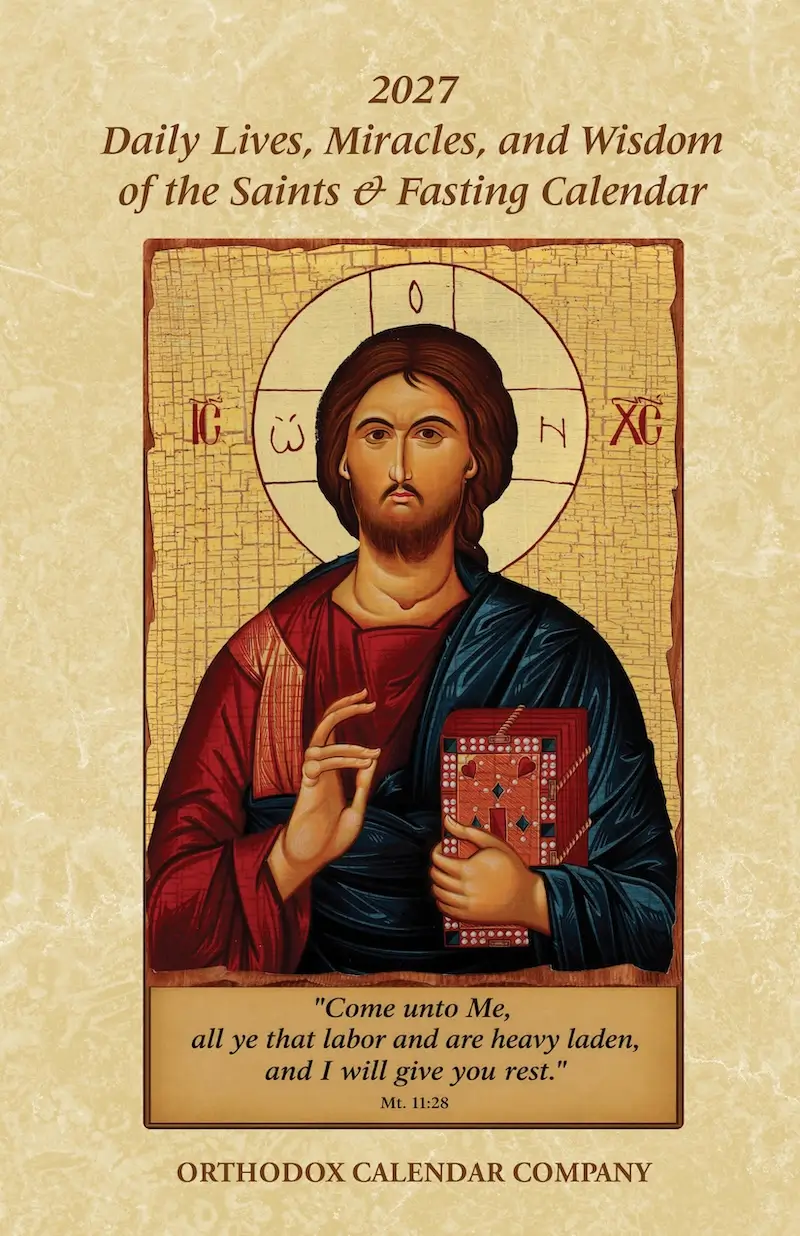
Hand-finished icons, books, and calendars to carry the Orthodox day into your home.
Read a life like this
every morning.
Meet the daily saints through Orthodox Daily Companion on iPhone and iPad, or through the Lives of the Saints web app in any modern browser.
Orthodox Daily Companion
The native Apple app, with a Home Screen widget, prayer reminders, and a private on-device journal.
Download on the App StoreLives of the Saints Web App
The browser experience for desktop, tablet, or phone, with a seven-day trial of the complete devotional library.
Open the web appGet a life like this one on every new tab - free, no account, from the same catalogue.
References and further reading
- orthodoxwiki.orghttps://orthodoxwiki.org/Apostle_Peter
- goarch.orghttps://www.goarch.org/-/feast-of-the-holy-glorious-and-all-praiseworthy-chiefs-of-the-apostles-peter-and-paul
- oca.orghttps://www.oca.org/saints/troparia/2025/06/29/101840-the-holy-glorious-and-all-praised-leaders-of-the-apostles-peter
- en.wikipedia.orghttps://en.wikipedia.org/wiki/Saint_Peter
- britannica.comhttps://www.britannica.com/biography/Saint-Peter-the-Apostle
- rsc.byu.eduhttps://rsc.byu.edu/peter-popes/simon-peter
- ecupatria.orghttps://www.ecupatria.org/2019/07/01/pope-francis-of-rome-gave-relics-of-saint-peter-to-the-church-of-constantinople/
- orthodoxchurchquotes.comhttps://www.orthodoxchurchquotes.com/2013/07/12/holy-apostles-peter-paul-troparion/
- christianhistoryinstitute.orghttps://christianhistoryinstitute.org/magazine/article/ch156-peters-fate
- orthodoxmonasteryicons.comhttps://orthodoxmonasteryicons.com/products/peter-the-apostle-icon
- ocf.nethttps://ocf.net/theres-a-saint-for-that-st-peter-the-apostle/
- en.wikipedia.orghttps://en.wikipedia.org/wiki/Feast_of_Saints_Peter_and_Paul
- saintsophiadc.orghttps://www.saintsophiadc.org/the-feast-day-of-saints-peter-and-paul/
- religionunplugged.comhttps://religionunplugged.com/news/2023/6/16/feast-of-saints-peter-and-paul-how-christians-around-the-world-celebrate
- greekerthanthegreeks.comhttps://greekerthanthegreeks.com/saints-peter-and-paul-feast-day-june-29th/
- nationaltoday.comhttps://nationaltoday.com/st-peters-day/
- spproc.orghttp://spproc.org/our-patron-saints-peter-paul/
- holidayscalendar.comhttps://www.holidayscalendar.com/event/feast-of-saints-peter-and-paul/
- holytrinityorthodox.comhttp://www.holytrinityorthodox.com/calendar/rss/troparion.htm
- holynewmartyrs.orghttps://holynewmartyrs.org/troparia2
More from the tradition.
Read the Journal
Essays on feasts, fasting, and the rhythm of the Church year.
ExploreOrthodox countries
How the faith is lived and kept across the Christian world.
ExploreThe 2027 Calendar
A saint, a reading, and the day's fasting guideline for every day of 2027.
ExploreMobile & web apps
Carry the daily rhythm on iPhone and iPad or continue in the web app.
Explore