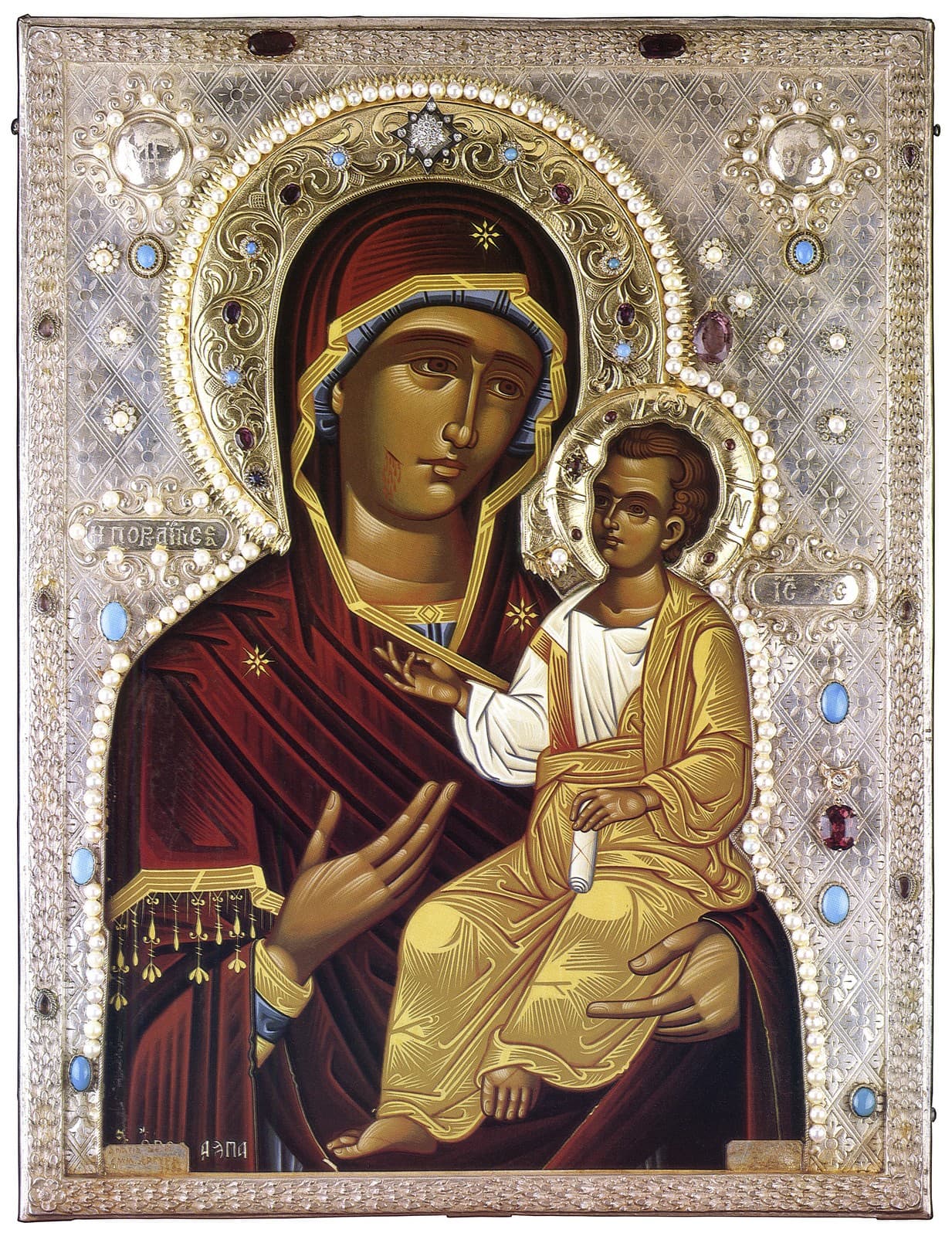
Saint Appearance
of the Iveron Icon of the Theotokos on Mount Athos.
Also known as Iveron Icon, Portaitissa Icon, Iviron Theotokos, Panagia Portaitissa, Iverskaya (Russian)
The feast commemorating the miraculous appearance of the Iveron (Portaitissa) Icon of the Most Holy Theotokos at the Iveron Monastery on Mount Athos, venerated since the 9th century for its many miracles.
Tone 1
Let us keep splendid festival today, O right-believing people, overshadowed by the advent of the icon of the Mother of God, with faith receiving therein a constantly attentive guardian; and let us cry out to the Theotokos: Protect us from all evil, and save thou our souls!
or
From thy holy icon, O Lady Theotokos, healings and cures are given abundantly to them who with faith and love draw near to it; Likewise do thou visit mine infirmity also, Have mercy on my soul, O good one, And heal my body by thy grace, O most pure one.
A Sacred
Icon's Journey Across the Sea
The Iveron Icon stands as one of the Eastern Orthodox Church's most treasured images, a witness to both the faith of those who risked everything to preserve it during iconoclasm and the miraculous protection of the Mother of God. The Iveron Monastery, in its location, was the most convenient entrance to the peninsula and therefore the Iveron Portaitissa is the guardian of the entire Holy Mountain. Its presence at the gates of the monastery remains a sign of the Theotokos's eternal protection and intercession.
Early years
In Nicea (now the Turkish city of Isnik), a rich, virtuous widow lived with her young son. The widow was praying in front of the icon in her house chapel one night when the iconoclasts came to abuse the holy image. One of the soldiers struck the icon with a sword. The blow fell into the image on the right cheek of the Most Pure Mother of God and immediately blood poured out of the wound. The frightened executioners hurried away, responding to the widow's pleas by agreeing to wait until the morning and promising the unthinkable amount of ransom for the icon.
In the Church
The Nicéan widow also handed her precious image of the Theotokos to the will of God. After the departure of the soldiers, she and her son went to the seashore and, with many prayers, parted with her icon by lowering it into the water. The young man, heeding his mother's pleas, fled that night to Mount Athos where he remained there and later accepted monasticism.
On Mount Athos, during the abbotship of St. Ephemios in the Georgian monastery of Iveron on Tuesday of Bright Week in the year 999, the monks were struck by a terrible and, at the same time awe inspiring phenomenon - on the surface of the sea they saw a pillar of fire emanating from an icon. Great excitement engulfed the monastery and with prayers many tried to take the icon by boat, but every time they drew near, it was moved further away.
Later years
This continued for several days, until they learned from Elder Gabriel the Georgian, who was struggling in a cave high above Iveron Monastery, that at night the Most Holy Theotokos appeared to him in a dream. Her will was revealed - the Mother of God wants to give Her image for protection and help to the monastery, and he must, without fear, walk through the waters and receive the icon. That night, to the chanting of monks standing on the shore, Elder Gabriel walked through the water and took the Holy Icon.
While the monks were celebrating a Service of thanksgiving, a cold, sweet spring miraculously gushed forth from the ground where the Icon was standing. Afterward, they took it into the church and placed in the sanctuary with great reverence. The next morning one of the monks went to light the lamps in church and discovered that the Icon was no longer where they had put it; now it was on the wall near the entry gate. The monks took it down and returned it to the sanctuary, but the next day the Icon was found once again at the Monastery gate.
Legacy and veneration
After this, the icon was permanently installed in a small Chapel next to the Gates where it remains to this day. Because of this, the icon came to be called Portaitissa or "Gate-Keeper". In 1648, Patriarch Nikon of Moscow, while he was still Archimandrite of Novospassky Monastery, commissioned an exact copy of the Iviron icon to be made and sent to Russia. Almost immediately upon its arrival on October 13, the icon was "glorified" with numerous miracles attributed to it by the faithful.
Several of the copies themselves have been known to be wonderworking, one of the most famous of which is the myrrh-streaming icon from Montreal in Canada. For fifteen years (1982–1997), as myrrh continued to flow from the Icon, Brother José Muñoz Cortés devoted himself to its care, accompanying it on numerous trips to parishes all over the United States and Canada, to South America, Australia, and Europe. Since June of 2008, the Iveron Icon has been to over 1000 churches in North America of all (canonical) jurisdictions, and has been venerated by millions of people throughout the United States, Canada, Europe and the world.
How the saint's
memory is kept.
- When is the feast day of the Iveron Icon of the Theotokos?
- The Iveron Icon is commemorated on multiple feast days: May 4, February 12, March 31, Bright Tuesday (movable), and October 13 (for the translation to Moscow in 1648).
- Where is the original Iveron Icon located?
- The original Iveron Icon (Panagia Portaitissa) is located in the Georgian Iveron Monastery on Mount Athos in Greece, where it has been since c. 999 AD.
- What is the Portaitissa title?
- Portaitissa means 'Gatekeeper' in Greek. The icon is called the Gatekeeper because the Mother of God revealed that she herself wished to be the guardian of the monks rather than being guarded by them, and the icon remained at the monastery gates.
- Why does the Iveron Icon have a scar?
- According to Orthodox tradition, the icon was stabbed with a sword or spear by an iconoclast soldier in Nicaea during Emperor Theophilus's reign (829-842), and blood miraculously flowed from the wound, which still appears as a scar on the Virgin's cheek.
- Has the Iveron Icon worked miracles?
- Yes. The icon is called 'Wonderworking' and countless miracles have been attributed to the intercession of the Theotokos through this icon, including healing of illnesses, protection from dangers, and spiritual transformation. Copies of the icon have also been miraculous, most famously the myrrh-streaming Montreal icon.
- Who retrieved the Iveron Icon from the sea?
- Saint Gabriel the Iberian (Gabriel the Georgian), a monk of the Iveron Monastery, was directed by the Mother of God in a vision to walk upon the waters and retrieve the icon, which he did c. 1004 AD on Tuesday of Bright Week.
- What is the history of the icon before Mount Athos?
- The icon belonged to a pious widow in Nicaea during the iconoclastic period. When soldiers came to destroy it, one struck it with his sword and blood flowed out. The widow cast the icon into the Mediterranean Sea to protect it, where it remained until monks saw it appearing on Mount Athos c. 999-1004 AD.
Tone VIII
Even though thy holy icon was cast into the sea by the widow who was unable to save it from the foe, O Theotokos, yet hath it been shown to be the preserver of Mount Athos and the gatekeeper of the Monastery of Iveron, frightening away the enemy and delivering from all misfortunes and dangers them that honour thee in our homeland.
Prayer to the Iveron Icon
Come, ye people, and let us worship before the wonder-working and most precious image of the Mother of God, which she hath given to the Monastery of Iveron as an ever-vigilant and invincible guardian; for she sheltereth that holy monastery, and all who live on Holy Athos, with her protection, and granteth abundant gifts of healings out of the inexhaustible wellspring of her holy icon, unto all who honor that wondrous image of the Mother of God.
Carry the tradition with you.
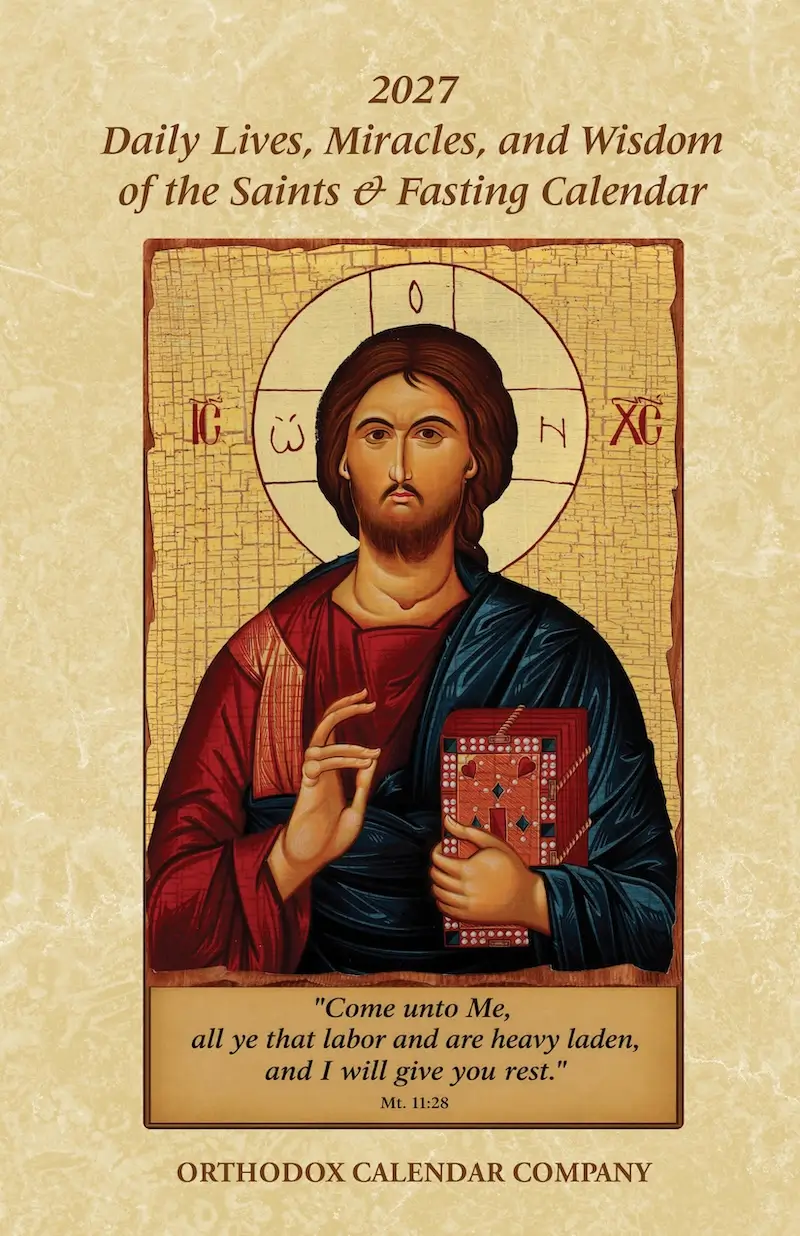
Hand-finished icons, books, and calendars to carry the Orthodox day into your home.
Read a life like this
every morning.
Meet the daily saints through Orthodox Daily Companion on iPhone and iPad, or through the Lives of the Saints web app in any modern browser.
Orthodox Daily Companion
The native Apple app, with a Home Screen widget, prayer reminders, and a private on-device journal.
Download on the App StoreLives of the Saints Web App
The browser experience for desktop, tablet, or phone, with a seven-day trial of the complete devotional library.
Open the web appGet a life like this one on every new tab - free, no account, from the same catalogue.
References and further reading
- iveronmonastery.orghttps://iveronmonastery.org/iveronicon
- en.wikipedia.orghttps://en.wikipedia.org/wiki/Panagia_Portaitissa
- orthochristian.comhttps://orthochristian.com/98119.html
- oca.orghttps://www.oca.org/saints/lives/2023/02/12/100512-ivron-icon-of-the-mother-of-god
- obitel-minsk.orghttps://obitel-minsk.org/en/the-iveron-icon-our-reminder-of-the-theotokos-loving-protection
- stgeorge.orghttps://stgeorge.org/2021/10/the-transfer-of-the-iveron-icon-of-the-theotokos/
- oca.orghttps://www.oca.org/saints/lives/2008/03/31/100962-appearance-of-the-ivron-icon-of-the-mother-of-god
- orthodoxwiki.orghttps://orthodoxwiki.org/Panagia_Portaitissa
- legacyicons.comhttps://legacyicons.com/theotokos-of-iveron-1880-icon-t155/
- mount-athos.orghttps://mount-athos.org/en/mount-athos/icons-relics/portaitissa
- theholyart.orghttps://theholyart.org/blogs/news/bright-tuesday-the-appearance-of-panagia-portaitissa-on-mount-athos
- stnicholasstratford.orghttps://stnicholasstratford.org/hawaiian_iveron_icon
- oca.orghttps://www.oca.org/saints/troparia/2022/02/12/100512-ivron-icon-of-the-mother-of-god
- myrrh-bearers.orghttps://myrrh-bearers.org/english/march/M03-31-Iveron.html
- oca.orghttps://www.oca.org/saints/lives/2025/03/31/100962-appearance-of-the-ivron-icon-of-the-mother-of-god
- russianorthodoxchurchcardiff.comhttps://russianorthodoxchurchcardiff.com/the-canon-to-the-mother-of-god-in-honour-of-her-iveron-icon
- orthochristian.comhttps://orthochristian.com/116791.html
- stjohndc.orghttps://stjohndc.org/en/brother-munios/iveron-myrrh-streaming-icon-mother-god
- ohiia.orghttps://www.ohiia.org/
- orthochristian.comhttps://orthochristian.com/98876.html
More from the tradition.
Read the Journal
Essays on feasts, fasting, and the rhythm of the Church year.
ExploreOrthodox countries
How the faith is lived and kept across the Christian world.
ExploreThe 2027 Calendar
A saint, a reading, and the day's fasting guideline for every day of 2027.
ExploreMobile & web apps
Carry the daily rhythm on iPhone and iPad or continue in the web app.
Explore