Saint Hieromartyr Silvanus
of Gaza.
Also known as Silvanus, Bishop of Gaza, Silvanus the Bishop, Sylvain, Sylvano
Bishop of Gaza martyred in 311 AD with forty companions during the Diocletianic persecution. Once a soldier, he became a priest and later bishop, converting many pagans to Christ before his final martyrdom at the copper mines of Phaeno.
Tone 4
By sharing in the ways of the Apostles, / you became a successor to their throne. / Through the practice of virtue, you found the way to divine contemplation, O inspired one of God; / by teaching the word of truth without error, you defended the Faith, / even to the shedding of your blood. / Hieromartyr Silvanus, entreat Christ God to save our souls.
A Soldier
of Christ: From Worldly Service to Martyrdom
Silvanus was born in Gaza, Palestine, where he initially served as a soldier in the Roman military. Recognizing a higher calling, he left worldly service to become a priest and eventually bishop of Gaza. In this office he earned renown for converting pagans and governing his flock with wisdom and piety. During the Diocletianic persecution, he was tortured, condemned to the mines, and finally beheaded - along with forty others who had come to faith through his preaching - in the year 311.
Early years
Saint Silvanus came from the vicinity of the city of Gaza, and was a soldier. Desiring to serve the heavenly King, he became a priest, and was consecrated Bishop of Gaza. Though the precise dates and circumstances of his youth remain shrouded in antiquity, the historical record suggests he was an older man when he took up the episcopal office - a man of mature years whose life had already been marked by discipline and personal conviction.
This blessed Silvanus came from Gaza, and he was one of the veteran soldiers; and when his freedom from service proved to be contrary to his habits, he enlisted himself as a good soldier of Christ. For he was a perfectly meek man, and of a bright mind, and used his faith with simplicity and purity. He was a presbyter of the church in the city of Gaza, and conducted himself there with great propriety. His transition from military to ecclesiastical life reveals a profound spiritual awakening and conversion of heart.
In the Church
As bishop of Gaza, Silvanus became known for his pastoral leadership and missionary zeal. He then became known for his life of exemplary rectitude and piety and was therefore made presbyter of the Gazan church. During the Diocletian Persecution he was condemned to work as a slave in the copper mines of Phaeno. His elevation to the episcopate came at a critical hour, as the persecution began to intensify against the Church's leadership.
And because the conflict for life was proclaimed against the soldiers of Christ, he, an old man, of a noble person, went down to the Stadium, and there, in his first confession before the people of Caesarea, he acquitted himself valiantly, being tried with scourgings. And when he had endured these bravely, he fought in a second conflict, in which the old man endured the combs on his sides like a young man. And at the third conflict he was sent to the copper mines; and during a life of much length he exhibited great probation.
Later years
By that time he was already old and soon weakened under the atrocious work in the mines, making him incapable of continue to work though he encouraged his fellow Christians to remain strong in their faith. The copper mines of Phaeno were designed as instruments of slow death - exhausting labor in harsh conditions, where Christians and other victims of imperial policy suffered and perished.
And suddenly a mandate of wickedness was issued, and command was given that all those in the mines who were become enfeebled through old age or sickness, and those who were not able to work, should be put to death by the sword; and God's martyrs, being all together forty in number, were beheaded all in one day. And many of them were Egyptians, but their leader and guide was this same martyr and bishop of martyrs, Silvanus, a man truly blessed and beloved of God. His final act as a shepherd was to lead his flock - both physically and spiritually - into the kingdom of heaven through martyrdom, his blood joining that of the apostles in witnessing to Christ.
Legacy and veneration
Eusebius speaks with high admiration of his Christian endurance, saying that he was "reserved to the last to set the seal, as it were, to the conflict in Palestine" (Ecclesiastical History, Book VIII). This description, written by the greatest Church historian of antiquity, underscores Silvanus's significance in the final chapter of persecution in the Holy Land.
The Eastern Orthodox Church commemorates Silvanus on May 4 (the feast of Silvanus and the Forty Martyrs) and also on October 14 (as the Hieromartyr Silvanus of Gaza individually). He is venerated as a saint by the Roman Catholic and the Eastern Orthodox Church and his feast day is the 4 May and the 14 October, respectively. His intercession is invoked by the faithful as a model of steadfast faith, pastoral courage, and militant witness during times of persecution.
The martyrdom of Silvanus and his companions at Phaeno occurred among the final acts of state-sponsored violence against Christians in Palestine. In the East, the persecution was officially discontinued on 30 April 311, although martyrdoms in Gaza continued until 4 May. Thus Silvanus stands at the threshold of the Church's emergence from the catacombs into the light of imperial toleration and, eventually, favor.
How the saint's
memory is kept.
- Who was Hieromartyr Silvanus of Gaza?
- Silvanus was a bishop of Gaza in Palestine who was martyred in 311 AD. Originally a soldier, he became a priest and then bishop, converting many pagans to Christ. He was tortured, condemned to the copper mines of Phaeno, and finally beheaded along with forty other Christians during the Diocletianic persecution.
- When is the feast day of Saint Silvanus?
- The Eastern Orthodox Church commemorates Silvanus on May 4 (the feast of Silvanus and the Forty Martyrs) and also on October 14 (as the Hieromartyr Silvanus of Gaza individually). May 4 is the primary feast in the Western calendar churches, and October 14 is observed by many Eastern Orthodox churches on the calendar they use.
- What was the Diocletianic persecution?
- The Diocletianic persecution (303–311 AD) was the final and most intensive effort by the Roman Empire to eradicate Christianity through state-enforced measures under Emperor Diocletian and his successors. It involved the destruction of churches, confiscation of Christian property, imprisonment of clergy, torture, and execution of countless believers.
- How did Silvanus become a bishop?
- Silvanus first served as a soldier in the Roman military, then left worldly service to become a priest of the church in Gaza. He earned renown for his piety, exemplary conduct, and missionary success in converting pagans to Christ. The Christian community ordained him as bishop not long before the persecutions intensified.
- Where did Silvanus suffer martyrdom?
- Silvanus was martyred at the copper mines of Phaeno in Palestine (modern-day Wadi Faynan in southern Jordan), one of the largest mining operations in the Roman Empire. He was beheaded there in 311 AD along with forty other Christians, many of whom were Egyptians, and some of whom had converted to faith through Silvanus's preaching in the mines.
- How many martyrs were killed with Silvanus?
- Forty holy martyrs were beheaded together with Silvanus on May 4, 311 AD. Many of these forty were Egyptians and soldiers. Some had come to believe in Christ after hearing Silvanus preach in the mines, becoming confessors and martyrs through his witness.
- What makes Silvanus significant in Church history?
- Eusebius of Caesarea, the ancient Church historian, noted that Silvanus was 'reserved to the last to set the seal, as it were, to the conflict in Palestine.' His martyrdom was among the final acts of persecution in the Holy Land, occurring just days before the official end of persecutions in the East on April 30, 311.
- Is Saint Silvanus venerated outside the Eastern Orthodox Church?
- Yes, Saint Silvanus is venerated as a saint by both the Roman Catholic Church and the Eastern Orthodox Church. However, he is commemorated on different dates: May 4 in the Roman Catholic tradition and May 4 or October 14 in the Eastern Orthodox tradition, depending on the particular church's calendar.
The kontakion specific to Saint Silvanus does not appear in the principal sources reviewed. However, the May 4 commemoration (Hieromartyr Silvanus, Bishop of Gaza, and 40 Martyrs with him) is marked in the Eastern Orthodox liturgical calendar with its own troparia and kontakia. The faithful may consult the full Menaion for May 4 to find the complete hymnographic texts appointed for this feast.
Holy Hieromartyr Silvanus of Gaza, intercessor for the persecuted and model of steadfast faith, we bow before your memory and beseech your powerful aid. You who endured torture and imprisonment with unwavering courage, praying all the while for those who tormented you; you who kept Christ's faith burning like a lamp in the darkness of the mines; you who led your flock to the heavenly pasture through the gates of martyrdom - remember us who are yet subject to the temptations of this world.
By your victorious endurance and your holy blood, we ask that you intercede for us before the throne of Christ our God, that we may receive strength in our trials, wisdom in our confusion, and unwavering faith in our doubts. Guide us that we may follow your example, loving Christ above all things, submitting cheerfully to His divine will, and bearing witness to the truth even unto the end. Holy Hieromartyr Silvanus, pray for us unto the Lord that He may save our souls. Amen.
Carry the tradition with you.
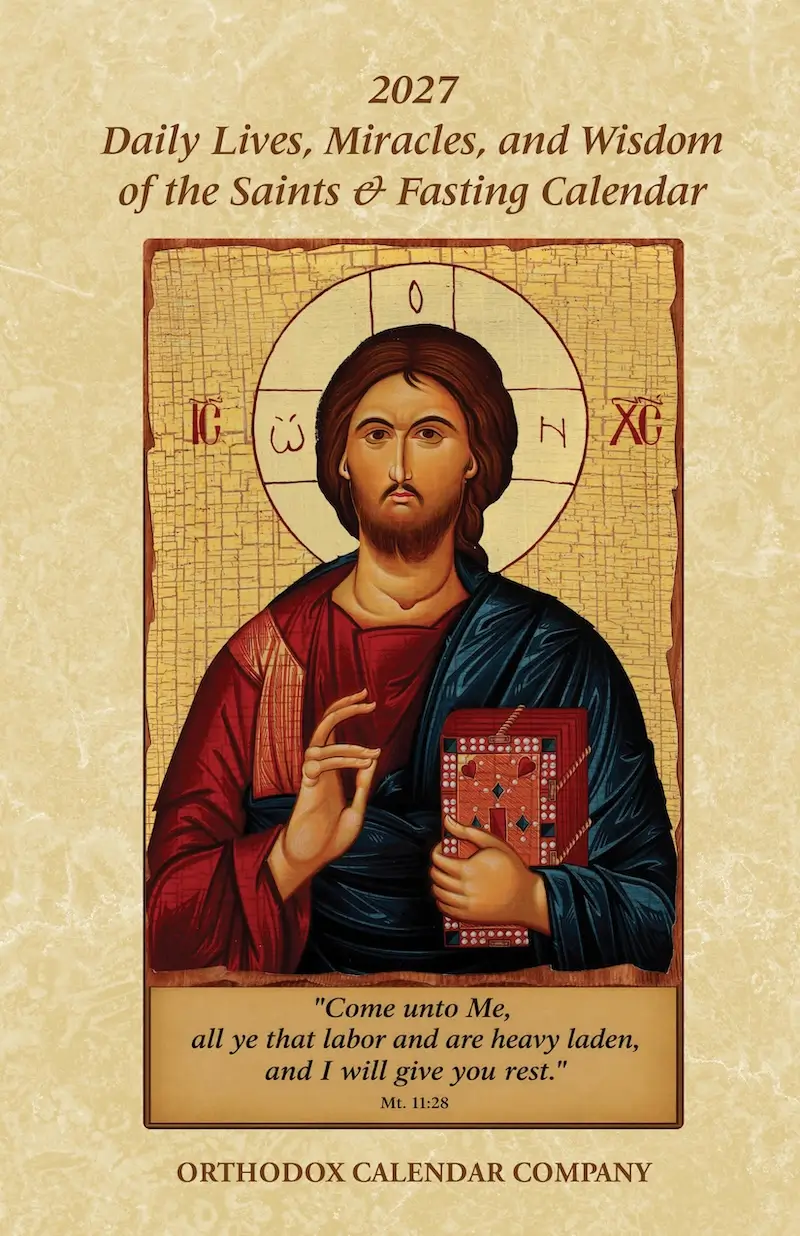
Hand-finished icons, books, and calendars to carry the Orthodox day into your home.

Read a life like this
every morning.
Meet the daily saints through Orthodox Daily Companion on iPhone and iPad, or through the Lives of the Saints web app in any modern browser.
Orthodox Daily Companion
The native Apple app, with a Home Screen widget, prayer reminders, and a private on-device journal.
Download on the App StoreLives of the Saints Web App
The browser experience for desktop, tablet, or phone, with a seven-day trial of the complete devotional library.
Open the web appGet a life like this one on every new tab - free, no account, from the same catalogue.
References and further reading
- oca.orghttps://www.oca.org/saints/lives/2021/05/04/101294-hieromartyr-silvanus-bishop-of-gaza-and-40-martyrs-with-him
- oca.orghttps://www.oca.org/saints/lives/2019/10/14/102970-hieromartyr-silvanus-of-gaza
- oca.orghttps://www.oca.org/saints/troparia/2019/10/14/102970-hieromartyr-silvanus-of-gaza
- oca.orghttps://www.oca.org/saints/troparia/2022/05/04/101294-hieromartyr-silvanus-bishop-of-gaza-and-40-martyrs-with-him
- en.wikipedia.orghttps://en.wikipedia.org/wiki/Silvanus_of_Gaza_(hieromartyr)
- orthochristian.comhttps://orthochristian.com/113022.html
- johnsanidopoulos.comhttps://www.johnsanidopoulos.com/2017/10/holy-hieromartyr-silvanus-of-gaza.html
- orderofsaintgeorge.orghttps://orderofsaintgeorge.org/saint-sylvanus-of-gaza-no-international-wire-needed-to-ask-the-saints-to-intercede/
- studylight.orghttps://www.studylight.org/dictionaries/eng/hwd/s/silvanus-bishop-of-gaza.html
- patheos.comhttps://www.patheos.com/blogs/voxnova/2011/05/04/the-feast-of-st-silvanus-of-gaza/
- en.wikipedia.orghttps://en.wikipedia.org/wiki/Gazan_Christians
- newadvent.orghttps://www.newadvent.org/fathers/2505.htm
- en.wikipedia.orghttps://en.wikipedia.org/wiki/Khirbat_Faynan
- en.wikipedia.orghttps://en.wikipedia.org/wiki/Diocletianic_Persecution
- saintforaminute.comhttps://www.saintforaminute.com/saints/saint_silvanus_of_gaza
- orthodoxwiki.orghttps://orthodoxwiki.org/October_14
- en.wikipedia.orghttps://en.wikipedia.org/wiki/October_14_(Eastern_Orthodox_liturgics)
- en.wikipedia.orghttps://en.wikipedia.org/wiki/May_4_(Eastern_Orthodox_liturgics)
- orthodox.nethttps://www.orthodox.net/menaion-may/04-the-hieromartyr-silvanus-bishop-of-gaza.html
- monasticrepublic.comhttps://www.monasticrepublic.com/en/orthodox-synaxarion/october/saint-silvanus
More from the tradition.
Read the Journal
Essays on feasts, fasting, and the rhythm of the Church year.
ExploreOrthodox countries
How the faith is lived and kept across the Christian world.
ExploreThe 2027 Calendar
A saint, a reading, and the day's fasting guideline for every day of 2027.
ExploreMobile & web apps
Carry the daily rhythm on iPhone and iPad or continue in the web app.
Explore