Saint Hieromartyrs Felix, Fortunatus, and Achilleus
of Valence.
Also known as Saints Felix, Fortunatus, and Achilleus, Martyrs Felix, Fortunatus, and Achilleus, Hieromartyrs Phylikos, Fourtunatos, and Achilleos, Phylikos, Fourtunatos, and Achilleos of Valence
Three early Western hieromartyrs of Roman Gaul who evangelized Valence, France, and suffered martyrdom c. 212 under Emperor Caracalla.
Tone 4
Your holy hieromartyr priests, O Lord,
Through their struggles have received an incorruptible crown from You, our God.
For having Your strength, they laid low their adversaries,
And shattered the powerless boldness of demons.
Through their intercessions, save our souls!
The Three
Hieromartyrs of Valence
Felix was a priest, and Fortunatus and Achilleus were deacons, all sent by Saint Irenaeus of Lyon to evangelize Valence in early 3rd-century Gaul. Through preaching and miracles they converted many to the faith, but were arrested, tortured, and ultimately martyred by beheading around 212 AD during the reign of Caracalla.
Early years
Little is known with certainty about the early lives and families of these three saints. They were disciples and missionaries chosen by Saint Irenaeus, the bishop of Lyon and one of the great Fathers of the early Church. Irenaeus, who had himself been influenced by Saint Polycarp (a disciple of the Apostle John), sent numerous missionaries to evangelize the cities and towns of Roman Gaul during the late 2nd and early 3rd centuries. Felix, Fortunatus, and Achilleus were among these chosen preachers of the Gospel.
Felix held the ecclesiastical rank of priest, while Fortunatus and Achilleus served as deacons - an indication that they were already ordained clergy with formal standing in the young Church. They were likely well-versed in the faith and trained in the apostolic teachings, equipped to teach and defend Christian doctrine against pagan idolatry and heresy.
In the Church
As ministers sent by the bishop of Lyon, Felix, Fortunatus, and Achilleus undertook the apostolic task of establishing Christianity in Valence. They lived together in humble circumstances and maintained a life of great penance and prayer. From their simple lodging, they labored day and night to proclaim the Gospel to the pagan inhabitants of the city.
Their preaching was accompanied by miracles that confirmed the power of Christ. Many of the people of Valence believed and were converted to the Christian faith through their testimony and intercession. The saints also performed a sacramental act of great symbolic importance: when freed from prison by an angelic visitation, they proceeded to the pagan temples and, in holy zeal for the true God, demolished the idols and images of the false gods - Mercury, Saturn, and the precious Jupiter statue. This act of iconoclasm against pagan idolatry marked their definitive stance against the worship of demons and false deities.
Later years
The martyrdom of these three priests was preceded by their arrest and imprisonment. While in custody, according to their accounts, an angel appeared and freed them from their chains, commanding them to destroy the idols in the temples. Upon their release and their bold destruction of pagan statues, they were immediately recaptured by the authorities and subjected to terrible punishments.
The magistrates ordered their legs to be broken - a form of execution in itself - and then had them bound to wheels and tortured. In addition, they were subjected to suffocating fumes and smoke, day and night, upon racks. Yet through all these inhuman torments, they remained steadfast in their confession of Christ and refused to renounce their faith or return to pagan worship. Finally, having endured all these sufferings, the three hieromartyrs were brought to execution and beheaded by the sword around the year 212 during the reign of Emperor Caracalla. By their martyrdom, they sealed their testimony with their blood and entered into eternal glory.
Legacy and veneration
The three hieromartyrs of Valence became among the first known Christian martyrs of Roman Gaul and remain important witnesses to the early spread of Christianity in Western Europe. Their legacy endured in local tradition and the ecclesiastical memory of the Church, and they were commemorated in the liturgy from ancient times. The Church recognized their virtue and constancy as exemplars of faith and courage in the face of persecution.
Relics venerated as those of these saints have been preserved and honored in various locations. Relics believed to be those of Felix, Fortunatus, and Achilleus are venerated in Valencia, Spain, though historically these may be remains of other saints with similar names. Some relics of Fortunatus are also traditionally associated with the church of Sant'Andrea della Valle in Rome. Regardless of the precise location of their physical remains, the spiritual witness and intercessory power of these martyrs endures in the prayers and devotion of the Orthodox faithful who invoke them for protection and strength in the struggle against sin and error.
How the saint's
memory is kept.
- Who were the three hieromartyrs Felix, Fortunatus, and Achilleus?
- Three early Christian martyrs - Felix a priest and Fortunatus and Achilleus deacons - sent by Saint Irenaeus of Lyon to evangelize Valence in Roman Gaul. Through preaching and miracles they converted many; they were arrested, tortured, and martyred by beheading c. 212 AD.
- When and where did they suffer martyrdom?
- They were martyred around 212 AD in Valence, France, during the reign of Emperor Caracalla. They were beheaded after enduring torture and imprisonment for destroying pagan idols.
- What is their feast day in the Eastern Orthodox Church?
- Their feast day is April 24 on the Gregorian (New) calendar, when the Eastern Orthodox Church commemorates them as Hieromartyrs Phylikos, Fourtunatos, and Achilleos.
- How did they evangelize Valence?
- They lived in humble circumstances, maintained strict penance, and preached the Gospel to the pagan inhabitants. Their preaching was accompanied by miracles, through which many people were converted to the Christian faith.
- Why were they arrested and executed?
- They were arrested because their successful conversion of the people angered pagan authorities. After being freed by an angel, they destroyed pagan idols in temples, an act that led to their recapture, torture, and eventual execution by beheading.
- Who sent them on their mission to Valence?
- Saint Irenaeus, the bishop of Lyon and a great Father of the early Church, sent Felix, Fortunatus, and Achilleus as missionaries to Valence to establish Christianity in that city.
No kontakion specific to these saints is included in standard Orthodox service books. The synaxarion entry and troparia commemorate their witness and martyrdom in the general style of the early confessors and martyrs of the Western Church.
O holy hieromartyrs Felix, Fortunatus, and Achilleus, priests and deacons of Christ, who suffered courageously for the true faith in the city of Valence, we humbly beseech you: stand before the throne of our merciful God and intercede for us sinners. By your holy prayers and the shedding of your precious blood, obtain for us the grace of strengthened faith, the courage to resist temptation and sin, and deliverance from all spiritual enemies. Guide us in the ways of godliness and truth, as you guided the faithful of your time. Help us to imitate your steadfastness and unwavering devotion to Christ, that we too may receive the unfading crown of eternal glory in His kingdom. Through your intercessions, save and have mercy upon us. Amen.
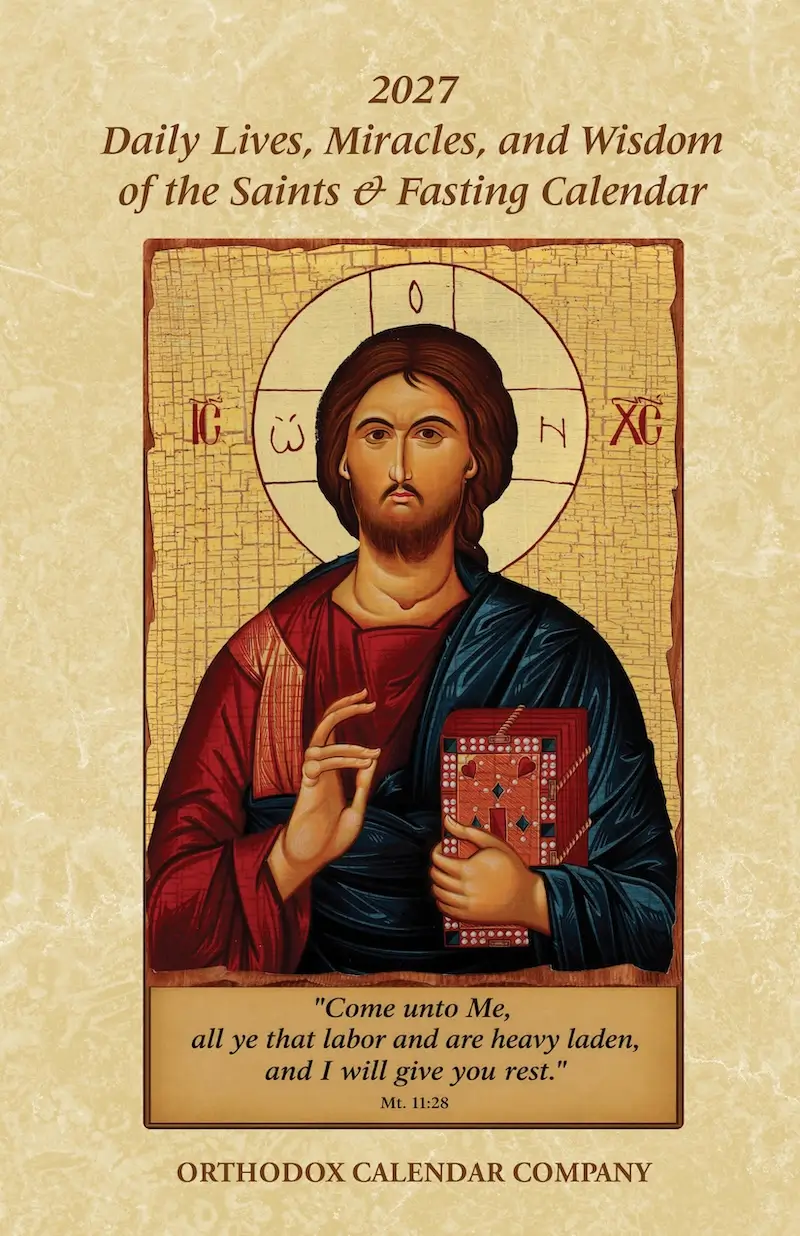
Carry the tradition with you.
Hand-finished icons, books, and calendars to carry the Orthodox day into your home.

Read a life like this
every morning.
Meet the daily saints through Orthodox Daily Companion on iPhone and iPad, or through the Lives of the Saints web app in any modern browser.
Orthodox Daily Companion
The native Apple app, with a Home Screen widget, prayer reminders, and a private on-device journal.
Download on the App StoreLives of the Saints Web App
The browser experience for desktop, tablet, or phone, with a seven-day trial of the complete devotional library.
Open the web appGet a life like this one on every new tab - free, no account, from the same catalogue.
References and further reading
- en.wikipedia.orghttps://en.wikipedia.org/wiki/Felix,_Fortunatus,_and_Achilleus
- orthodoxwiki.orghttps://orthodoxwiki.org/April_24
- en.wikipedia.orghttps://en.wikipedia.org/wiki/April_24_(Eastern_Orthodox_liturgics)
- catholic.orghttps://www.catholic.org/saints/saint.php?saint_id=542
- newadvent.orghttps://www.newadvent.org/cathen/15250a.htm
- britannica.comhttps://www.britannica.com/biography/Irenaeus
- csla.history.ox.ac.ukhttp://csla.history.ox.ac.uk/record.php?recid=E06306
- portal.sds.ox.ac.ukhttps://portal.sds.ox.ac.uk/articles/online_resource/Felix_Fortunatus_and_Achilles_priest_and_two_deacons_martyrs_of_Valence_Gaul/13735570/1
- santosepulcro.co.ilhttps://santosepulcro.co.il/en/saints/sts-felix--fortunatus---achilleus/
- religion.fandom.comhttps://religion.fandom.com/wiki/Felix,_Fortunatus,_and_Achilleus
- dbpedia.orghttps://dbpedia.org/page/Felix,_Fortunatus,_and_Achilleus
- thefacts.apphttps://thefacts.app/facts/special-days/felix-fortunatus-and-achilleus
- ipfs.fleek.cohttps://ipfs.fleek.co/ipfs/QmXoypizjW3WknFiJnKLwHCnL72vedxjQkDDP1mXWo6uco/wiki/Felix,_Fortunatus,_and_Achilleus.html
- johnsanidopoulos.comhttps://www.johnsanidopoulos.com/2018/08/holy-martyrs-felix-fortunatus.html
- catholicsaints.infohttps://catholicsaints.info/book-of-saints-felix-fortunatus-and-achilleus/
- youtube.comhttps://www.youtube.com/watch?v=zmLWY-rs2zY
- youtube.comhttps://www.youtube.com/watch?v=ETZ6OJROuko
- iconandlight.wordpress.comhttps://iconandlight.wordpress.com/2023/08/02/be-careful-dont-be-fooled-be-careful-not-to-be-misled-elder-savvas-achilleos-alexander-solzhenitsyn/
- catholic.orghttps://www.catholic.org/saints/saint.php?saint_id=4945
- newadvent.orghttps://www.newadvent.org/cathen/10751a.htm
More from the tradition.
Read the Journal
Essays on feasts, fasting, and the rhythm of the Church year.
ExploreOrthodox countries
How the faith is lived and kept across the Christian world.
ExploreThe 2027 Calendar
A saint, a reading, and the day's fasting guideline for every day of 2027.
ExploreMobile & web apps
Carry the daily rhythm on iPhone and iPad or continue in the web app.
Explore