Saint Hieromartyr Valentine, Bishop
of Interamna.
Also known as Saint Valentine of Terni, Valentine of Interamna, Valentinus, Bishop of Terni
A bishop in Umbria (Italy) in the city of Interamna who received from God the gift of healing various maladies, beheaded upon orders of the prefect during the third century persecution of Christians.
Tone 4
Thou hast become like the Apostles in their states, a successor to their throne, finding indeed the intelligential ladder, O thou God-inspired. Therefore, thou hast followed the Word of God in righteousness, and striven unto blood for the Faith. O Martyr among Priests, Saint Valentine, intercede with Christ God to save our souls.
The Holy
Hieromartyr and Healer
Saint Valentine was a bishop in Umbria (Italy), in the city of Interamna, where he labored as a pastor and healer during the early Christian era. He received from God the gift of healing various maladies, drawing both believers and pagans to faith in Christ through his pastoral care and miraculous intercession. When Roman authorities began their systematic persecution of Christians, he paid the ultimate price for his witness.
Early years
Little is recorded of Saint Valentine's early life. He served as a bishop in the city of Interamna in Umbria (Italy), where he became known as a pastor devoted to the spiritual welfare of his flock and to the relief of their bodily afflictions.
In the Church
As bishop of Interamna, Saint Valentine received from God the gift of healing various maladies. When three pagan youths from Athens - Proculus, Ephebus, and Apollonius - came to Rome to study under the philosopher Craton, the bishop's miraculous healing of Craton's severely ill son, Cherimon, led to the conversion of the entire household and the three students themselves, who became devoted disciples of Saint Valentine.
As his disciples preached the faith and converted many idolaters, the authorities arrested the youths and threw them into prison, demonstrating the price of evangelical zeal in the persecuting empire.
Later years
When the prefect and city leaders learned of Valentine's evangelistic success, they demanded that he renounce Christ and worship idols. After much torture, he was imprisoned; learning of this, the prefect gave orders to take Valentine out of the prison and behead him.
His devoted students Proculus, Ephebus, and Apollonius retrieved his body and carried it to Interamnum, where they buried it. Both believers and pagans were drawn to them, and they converted many to the true Faith. The executioners beheaded the three youths by night, fearing a popular uprising. Abundius, learning that his friends had been executed, buried their bodies near the grave of holy Bishop Valentine.
Legacy and veneration
The relics of the bishop are in Terni. His relics are at the Basilica of Saint Valentine in Terni (Basilica di San Valentino). The relics of San Valentino were translated to their current position under the high altar in 1696. The crypt preserves the cranium of St Valentine and the presumed relics of SS Proculus, Ephebus and Apollonius, who were executed for having recovered St Valentine's body after his execution in Rome.
Many parts of the Eastern Orthodox Church celebrate Saint Valentine's Day on July 6 in honor of Roman presbyter Saint Valentine, and on July 30 in honor of Hieromartyr Valentine, the Bishop of Interamna (modern Terni). Among all the churches only the Orthodox Church venerates the memory of both Valentines. Saint Valentine is venerated as a patron of his native city of Terni and as an intercessor for the faithful.
How the saint's
memory is kept.
- When is the feast day of Hieromartyr Valentine, Bishop of Interamna, in the Eastern Orthodox Church?
- July 30 (according to the fixed date on the synaxarion used by all Orthodox churches whether old or new calendar)
- Where was Saint Valentine, Bishop of Interamna, a bishop?
- In the city of Interamna, which is modern-day Terni in Umbria, Italy.
- What miracles is Saint Valentine, Bishop of Interamna, known for?
- He received from God the gift of healing various maladies. His most famous miracle was the healing of Craton's son Cherimon, whose spine was so contorted that his head was bent down to his knees, which led to the conversion of the household and three young Athenian students.
- How did Hieromartyr Valentine, Bishop of Interamna, die?
- He was tortured and beheaded by order of the Roman prefect for refusing to renounce Christ and worship idols, c. 273 AD.
- Where are the relics of Saint Valentine, Bishop of Interamna, today?
- His relics are in Terni, Italy, preserved in the Basilica di San Valentino (Basilica of Saint Valentine), where they rest under the high altar in a gilded reliquary from 1696.
- Who were Saint Valentine's three disciples mentioned in his life?
- Proculus, Ephebus, and Apollonius - three young men from Athens who were converted and baptized by the saint, and who were later martyred for retrieving and honoring his body.
- Is Hieromartyr Valentine, Bishop of Interamna, the same person as Saint Valentine associated with Valentine's Day?
- The historical records are uncertain. The two Valentines - the Bishop of Interamna and a Roman presbyter - are recorded as separate individuals in early martyrologies, though scholars debate whether they may refer to the same person. The Eastern Orthodox Church commemorates them separately on July 30 and July 6, respectively.
The kontakion for this saint is not included in standard Eastern Orthodox service books readily available in English translation.
Holy Hieromartyr Valentine, thou bishop and wonderworker, who didst lay down thy life for Christ and for the salvation of His flock, we entreat thee: intercede with our Lord and God that He may grant us repentance from our sins, strengthen our faith in trials, and lead us to eternal life. Glory be to God for all His saints.
Carry the tradition with you.
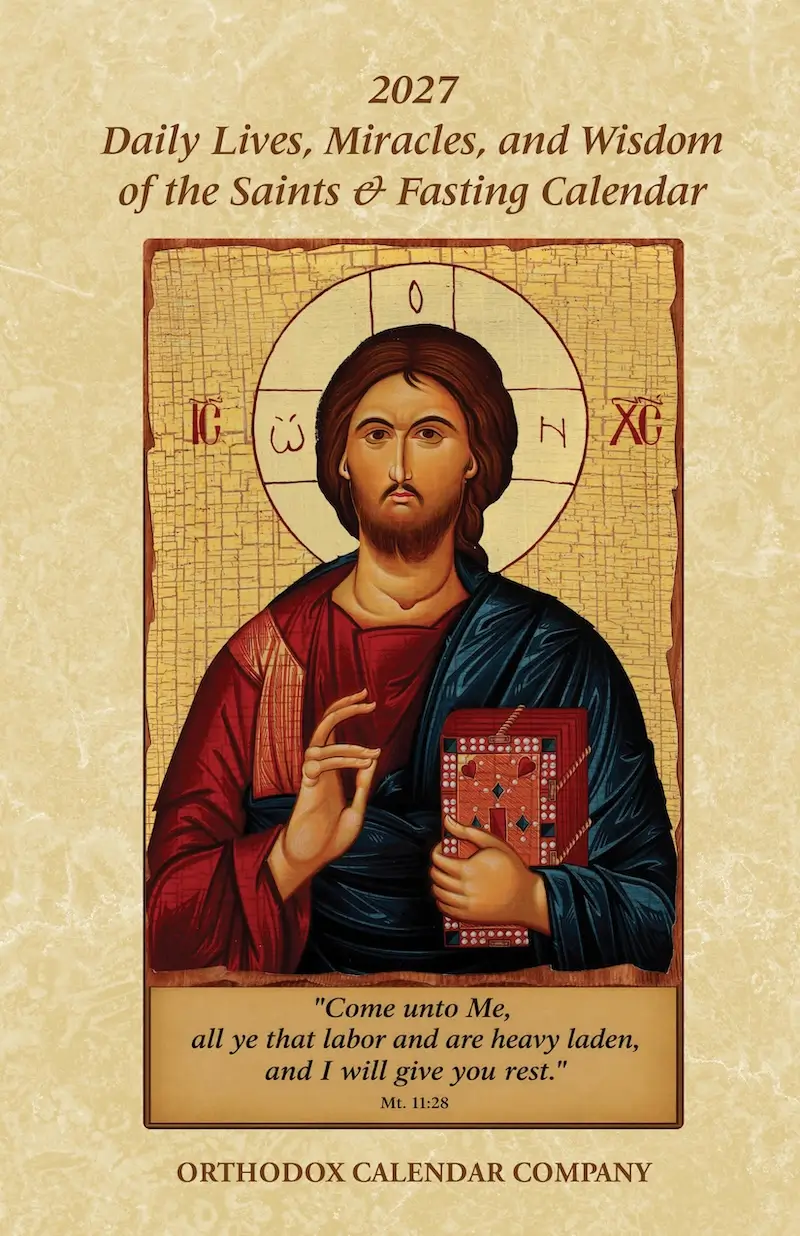
Hand-finished icons, books, and calendars to carry the Orthodox day into your home.

Read a life like this
every morning.
Meet the daily saints through Orthodox Daily Companion on iPhone and iPad, or through the Lives of the Saints web app in any modern browser.
Orthodox Daily Companion
The native Apple app, with a Home Screen widget, prayer reminders, and a private on-device journal.
Download on the App StoreLives of the Saints Web App
The browser experience for desktop, tablet, or phone, with a seven-day trial of the complete devotional library.
Open the web appGet a life like this one on every new tab - free, no account, from the same catalogue.
References and further reading
- oca.orghttps://www.oca.org/saints/lives/2025/07/30/102148-hieromartyr-valentine-bishop-of-interamna-terni-in-italy-and-tho
- oca.orghttps://www.oca.org/saints/troparia/2021/07/30/102148-hieromartyr-valentine-bishop-of-interamna-terni-in-italy-and-tho
- akathist.orghttps://www.akathist.org/st-valentine
- churchmotherofgod.orghttps://churchmotherofgod.org/articles/who-was-saint-valentine/
- en.wikipedia.orghttps://en.wikipedia.org/wiki/Saint_Valentine
- en.wikipedia.orghttps://en.wikipedia.org/wiki/Valentine's_Day
- en.wikipedia.orghttps://en.wikipedia.org/wiki/February_14_(Eastern_Orthodox_liturgics)
- britannica.comhttps://www.britannica.com/biography/Saint-Valentine
- italyheritage.comhttps://www.italyheritage.com/traditions/calendar/february/14-san-valentino.htm
- brewminate.comhttps://brewminate.com/saint-valentine-christian-martyr-in-ancient-rome/
- europeana.euhttps://www.europeana.eu/en/stories/who-was-saint-valentine
- blog.therelicproject.orghttps://blog.therelicproject.org/st-valentines-skull-happy-valentines-day-2/
- nationalgeographic.comhttps://www.nationalgeographic.com/history/article/behind-the-mystery-of-st-valentines-final-resting-place
- walksofitaly.comhttps://www.walksofitaly.com/blog/art-culture/the-strange-but-true-story-behind-valentines-day
- pravmir.comhttps://www.pravmir.com/st-valentines-day-legend-and-reality/
- atlasobscura.comhttps://www.atlasobscura.com/places/basilica-of-saint-valentine-terni
- keytoumbria.comhttps://www.keytoumbria.com/Terni/S_Valentino.html
- italofile.comhttps://www.italofile.com/saint-valentine-terni/
- umbriatourism.ithttps://www.umbriatourism.it/en/-/basilica-di-san-valentino-terni
- johnsanidopoulos.comhttps://www.johnsanidopoulos.com/2010/02/rehabilitating-memory-of-saint.html
More from the tradition.
Read the Journal
Essays on feasts, fasting, and the rhythm of the Church year.
ExploreOrthodox countries
How the faith is lived and kept across the Christian world.
ExploreThe 2027 Calendar
A saint, a reading, and the day's fasting guideline for every day of 2027.
ExploreMobile & web apps
Carry the daily rhythm on iPhone and iPad or continue in the web app.
Explore