The Twelve Great Feasts of the Orthodox Church: Their Meaning and Observances
What makes the Twelve Great Feasts of the Orthodox Church so special? These sacred days highlight moments of divine revelation. Whether it’s the Nativity of Christ or the Ascension, they call us to live our faith more deeply. Let’s dive in!
Entry details
- Published
- January 20, 2025
- Reading time
- 5 min read
Every feast day is a ladder to heaven.
Just as the adage goes: ‘One must pay his dues’ the same can be said about the Twelve Great Feasts of the Orthodox Church. These feasts are not just birthdays - they are an opening to the divine, and observed with great religious intensity and ritual. Taken together, they constitute the structural framework of the Orthodox liturgical year, and help the Orthodox Christian navigate the course of the life of Christ and the life of the Theotokos (Virgin Mary).
Now let us discuss what these monumental celebrations mean, where they originated from and what was practiced during these celebrations.
The Twelve Great Feasts
There are two great feasts in the preparation for Christmas, the first one is the
Nativity of the Theotokos (September 8).
This feast commemorates the birthday of Virgin Mary, the beginning of salvation. It is said that Joachim and Anna, who did not have a child for many years, received a child – Mary after earnest prayer.
How it’s observed: People go to church to listen to the Divine Liturgy and sing the joyful hymns of the day such as “Your Nativity, O Virgin”. People tend to come together with their families to remember about the purity of Mary and her position in God’s plan.
The Holy Cross – Raising of the Cross (September 14)
The feast celebrates the finding of the Cross by St. Helena and its worship.
Tradition: In the Orthodox Church Cross is venerated with processions and intoning of ‘O Lord, save Your people’. This day also requires fasting and crosses signify the depth of the symbolism.
The Feast of the Presentation (November 21)
This feast is called The Entry of the Theotokos into the the Temple or The Feast of the Presentation of the Theotokos into the Temple.
Mary was an obedient child and was left at the Temple to live there till the time of her engagement to Joseph.
Symbolism: This feast has the message of dedicating one’s life to God in the hearts of the believers. It is common to use candles, which means Theotokos as the light of the world.
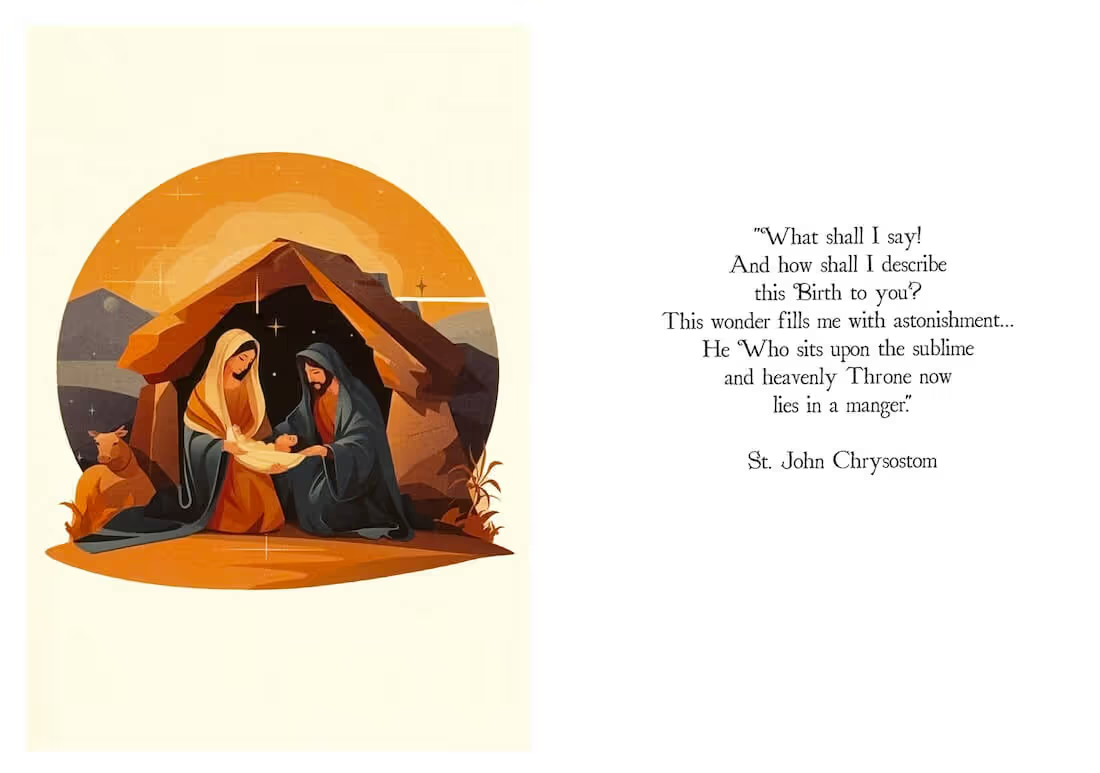
The Nativity of Christ (December 25)
Christmas commemorates the incarnation – God becoming human. It is one of the most glad feast which also focus on the theme of hope and forgiveness.
How it’s observed: Following the Nativity Fast, the Orthodox people celebrate a midnight Mass, then share a feast and perform benefactions.
Learn more about Celebrating Orthodox Christmas here
The feast of Theophany (January 6)
The feast of Theophany is the so-called Baptism of Christ.
Theophany is the manifestation of Christ baptized in the Jordan River and the manifestation of the Holy Trinity.
Rituals: The Great Blessing of the Waters is conducted, and people bring home water blessed for the purpose of blessing their lives.
The Presentation of Christ in the Temple (February 2)
After forty days from His birth, Christ was taken to the Temple. The main message of this feast is the words of Simeon, “A light to lighten the Gentiles.”
Observances: Candles are blessed candles and are being distributed symbolizing Jesus as the light of the world.
The Annunciation (March 25)
This feast is celebration of the message of the Archangel Gabriel to the Mary about the birth of the Son of God.
Traditions: This feast is celebrated during the Lenten season but the hymns of the day are cheerful just like the “Rejoice, O Full of Grace!” A light fish meal is usually allowed.
Palm Sunday
As the feast that commemorates the triumphal entry of Christ into Jerusalem it serves to remind believers of his royalty .
How it’s observed: Churches give out palm branches or pussy willows, and the processions mimic the shouts of ‘Hosanna!’
The Ascension (40 Days After Pascha)
The ascension of Christ is for His divine glory and the assurance of the Holy Spirit.
Reflection: This day is full of promises and believers are aware of their destiny in the next world.
Pentecost (or the fiftieth day from Pascha)
The coming of the Holy Spirit on the apostles is coincident with the beginning of the Church.
Celebrations: There are lots of plants hanging inside churches, and prayers are made to carry on with the newness that the Holy Spirit offers.
The Transfiguration Feast (August 6)
This feast commemorates the Transfiguration of Jesus when He disclosed His divine majesty to Peter, James and John.
Tradition: Grapes or other fruits are consecrated, to represent spiritual change.
The Feast of the Dormition of the Mother of God (August 15)
This day is for the celebration of the Virgin Mary’s “falling asleep” and also her bodily assumption into heavens.
How it’s observed: Following a Lenten fast that lasts for two weeks, the church celebrates the Theotokos with processions together with hymns to encourage her to intercede for Christians.
Why the Twelve Feasts Matter
All of these feasts are sacraments, uniting the faithful with God. It links the Orthodox Christian faith to significant events within the scheme of salvation history. But beyond the rituals, these feasts offer practical lessons:
1. Celebrate Communally: Participate in services, singing hymns and taking fellowship meals with the other members in the Church family.
2. Engage with Tradition: Prepare for feast days with the help of the 2025 Lives of the Saints Calendar and think about the meaning of these celebrations.
3. Live the Lessons: Introduce in your life the seven cardinal virtues of humility, sacrifice and love. Tools to Enhance Your Observances
For those looking to immerse themselves deeper:
Daily Readings: Scriptures and saintly sayings should be read by using the Orthodox Calendar as a guide.
Prayer Ropes: Enhance your religious devotions with the 33-Knot Mount Athos Wool Prayer Rope – the minimalist spiritual support.
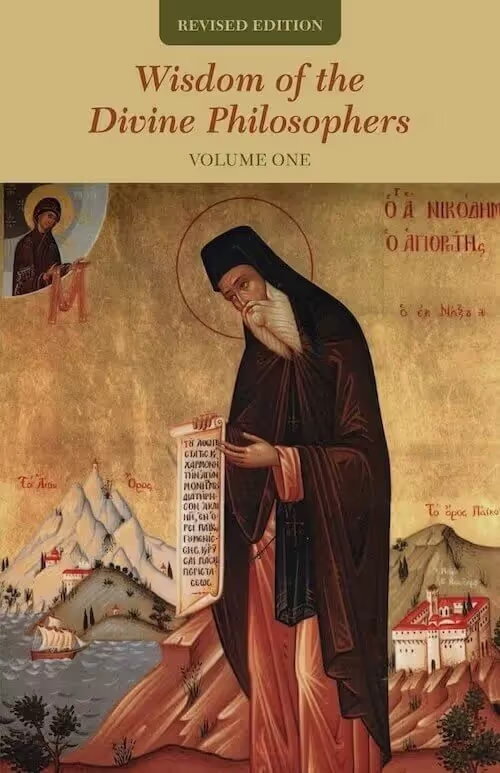
Books on the Feasts: For gaining knowledge in theological discussion one can read some books like Wisdom of the Divine Philosophers.
Conclusion
The Twelve Great Feasts are not only moments in the calendar, but the call to the divine experience. Besides, they deepen their religious experience and appreciation of the significance of such events and the participation in their celebrations, they keep their faith.
May these feasts turn your year around. Schedule them, empty your schedule and dive with the Orthodox Church into the celebration of the profound mysteries of salvation. As we use the form of words that has been handed down to us, the truth of the words is brought home to us: Christ is in our midst always, now, and forever!
Carry the reading home.
Chosen from our shelves to go with what you've just read.
- Ships in 2–3 business days
- Secure checkout · Stripe
- Gift note at checkout
- Arrives damaged? Replaced
.jpg&w=3840&q=75)
Continue the rhythm
of the Orthodox day.
Daily scripture, saints, and patristic wisdom - in the new native Apple companion or the browser-based web app.
Orthodox Daily Companion
The native Apple app, with a Home Screen widget, prayer reminders, and a private on-device journal.
Download on the App StoreLives of the Saints Web App
The browser experience for desktop, tablet, or phone, with a seven-day trial of the complete devotional library.
Open the web appFresh from the journal - newly published.
- Journal30Nov
Mount Sinai in Orthodox Christianity: Where Heaven Meets Earth
Discover why Mount Sinai stands as a profound symbol in Orthodox Christianity, representing the divine meeting point between God and humanity.
Read article - Journal01Mar
The Holy Fire Miracle in Jerusalem: A Testament of Faith for Orthodox Christians
Every Orthodox Holy Saturday in Jerusalem, an unexplainable flame emerges from Christ's tomb. This Holy Fire isn't just tradition; it's a living testament to faith, inviting believers worldwide to witness and reflect on its profound significance.
Read article - Journal01MarOrthodox Saints
The Life and Legacy of Saint Basil the Great: A Pillar of Orthodox Theology
Did you know Saint Basil defended the Trinity during a time of great heresy? His writings on the Holy Spirit and creation still inspire Orthodox theology. Learn about his contributions to faith and his lasting influence on the Church.
Read article
Keep reading the tradition.
Meet the saints
Martyrs, ascetics, and wonderworkers - the lives behind the feasts.
ExploreOrthodox countries
How the faith is lived and kept across the Christian world.
ExploreMobile & web apps
Carry the daily rhythm on iPhone and iPad or continue in the browser-based web app.
ExploreThe 2027 Calendar
A saint for every day of the year - now open for pre-order.
Explore