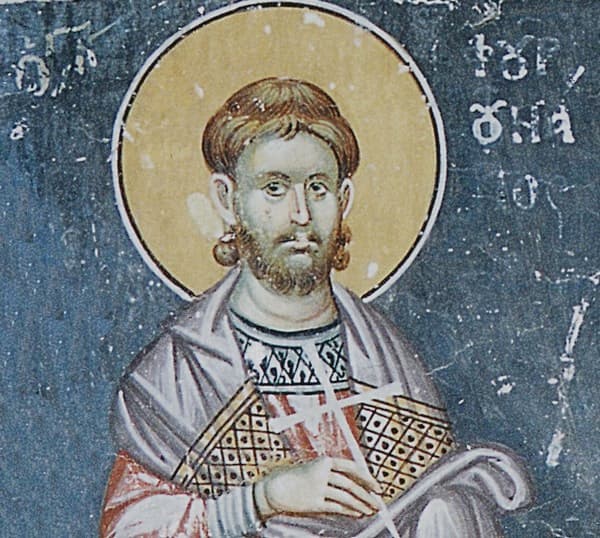
Saint Apostle Fortunatus
of the Seventy.
Also known as Fortunatus, Saint Fortunatus, Apostle Fortunatus, Fortunatus of Corinth
One of the Seventy Apostles chosen by Christ, mentioned by Saint Paul in 1 Corinthians 16:17. He labored in preaching the Gospel and later served as a messenger between the churches of Corinth and Rome.
- Feast day
- June 15 (New) · June 28 (Old)
Get a reminder on the feast in Orthodox Daily Companion →
Troparion of St. Apostle Fortunatus of the Seventy
Tone 3
Holy apostle Fortunatus of the Seventy, entreat the merciful God, to grant our souls forgiveness of transgressions.
The life of St. Apostle Fortunatus of the Seventy A Faithful
Apostle of the Early Church
Saint Fortunatus was one of the Seventy Apostles commissioned by Christ to spread the Gospel. A trusted companion of Saint Paul, he served faithfully in the apostolic mission and later became a messenger between the early Christian communities of Corinth and Rome, exemplifying the unity and communion of the ancient Church.
Early years
Saint Fortunatus emerges from the historical record as a member of the early Christian community in Corinth. He is mentioned by Saint Paul in 1 Corinthians 16:17, where the Apostle rejoices at his coming alongside Stephanas and Achaicus. The name Fortunatus is Latin, suggesting he may have been born into the Hellenistic world of the Mediterranean, though early Christian tradition identifies him with those commissioned by Christ himself to proclaim the Gospel.
In the Church
Saints Fortunatus, Akhaikos and Stephanas of the 70 Apostles were coworkers of the Apostle Paul, who, with all their heart and soul, helped to spread the Gospel among the nations. Fortunatus is perhaps the Latin name of Tykhikos, mentioned in the Acts of the Holy Apostles, which state that he came from Asia and accompanied Paul, along with others (Acts 20:5). Together with his companions, he strengthened the infant Church through apostolic preaching and pastoral care.
As a member of the Seventy, Saint Fortunatus participated in the missionary work established by Christ himself. The Seventy were sent two by two by the Lord Jesus Christ to go before Him into the cities He would visit (Luke 10:1). His apostolic ministry extended beyond the immediate circle of Corinth, connecting the various early Christian communities in their common faith and ecclesial fellowship.
Later years
Fortunatus survived Paul, as he was subsequently the messenger of the church at Corinth to that at Rome, and bore back to the Corinthians the Epistle which Clement of Rome sent to them. This service demonstrates the high regard in which he was held by the Church, entrusted with bearing an important epistle of apostolic instruction between two major centers of Christian life. His role as a messenger reflects the communion and mutual care that characterized the early apostolic communities.
After laboring greatly in preaching the word of God, he reposed in the Lord. Like his fellow apostles, Saint Fortunatus bore faithful witness to the Gospel throughout his life, enduring whatever trials and hardships came to those who proclaimed Christ in the pagan world.
Legacy and veneration
The holy, glorious, all-laudable Apostle Fortunatus of the Seventy is commemorated by the Church on June 15 with Achaicus and Stephen, and on January 4 with the Seventy. His commemoration alongside Saint Achaicus and Saint Stephen connects the individual apostles with the greater Synaxis of the Seventy, emphasizing the collegial nature of apostolic ministry.
The Synaxis of the Seventy Apostles is commemorated on January 4 and was established by the Orthodox Church to indicate the equal honor of each of the Seventy. The Church in particular venerates and praises the Seventy Apostles because they taught us to honor the Trinity One in Essence and Undivided. Saint Fortunatus remains a venerated intercessor, and the faithful invoke his prayers for steadfastness in the Orthodox faith and for the grace to serve Christ with undivided devotion.
Veneration of St. Apostle Fortunatus of the Seventy How the saint's
memory is kept.
- Patronage
- Patron of Faithful disciples, Messengers, Corinthian Church, Apostolic unity.
- Iconography
- Saint Fortunatus, as one of the Seventy Apostles, is typically depicted in Orthodox iconography wearing the vestments of the early Church and bearing a nimbus signifying his sanctity. In icons commemorating the Seventy Apostles collectively, he appears among the assembled apostles, often distinguished by his characteristic features and ecclesiastical dress. When depicted individually, he is shown as a mature apostolic figure, clothed in the simple vestments befitting a preacher of the Gospel. His image reflects the spiritual authority and pastoral concern that characterized his ministry as a companion of Saint Paul and servant of the apostolic tradition.
Frequently asked Questions about
St. Apostle Fortunatus of the Seventy.
- Who was Apostle Fortunatus?
- Apostle Fortunatus was one of the Seventy Apostles chosen by Christ to preach the Gospel. He was a close companion of Saint Paul and is mentioned in 1 Corinthians 16:17 as one of three Corinthian believers who visited Paul in Ephesus.
- When is the feast day of Saint Fortunatus?
- Saint Fortunatus is commemorated on June 15 together with Saints Achaicus and Stephen, and on January 4 with all the Seventy Apostles.
- What was Saint Fortunatus known for?
- Saint Fortunatus was known for his faithful service as a coworker with the Apostle Paul in spreading the Gospel, and later for serving as a messenger between the churches of Corinth and Rome, bearing the epistle of Pope Clement I.
- What is the relationship between Fortunatus, Achaicus, and Stephanas?
- These three were Corinthian believers who visited Saint Paul together in Ephesus and are mentioned together in 1 Corinthians 16:17. They were coworkers in the apostolic mission and later served as messengers between churches.
- How long did Saint Fortunatus live after Saint Paul?
- Saint Fortunatus survived Saint Paul and continued his apostolic ministry for many years. He is documented as serving as a messenger for the Church of Corinth in the time of Pope Clement I, which was after Paul's repose.
- What teaching did the Seventy Apostles emphasize?
- The Seventy Apostles taught the faithful to honor and worship the undivided Trinity - God the Father, Son, and Holy Spirit - and to maintain unity in the apostolic faith and communion of the Church.
- What is St. Apostle Fortunatus of the Seventy the patron saint of?
- St. Apostle Fortunatus of the Seventy is the patron saint of Faithful disciples, Messengers, Corinthian Church, and Apostolic unity.
Kontakion of St. Apostle Fortunatus of the Seventy
Tone 4
The Church ever sees you as a shining star, O apostle Fortunatus, Your miracles have manifested great enlightenment. Therefore we cry out to Christ: "Save those who with faith honor Your apostle, O Most Merciful One."
Prayer to St. Apostle Fortunatus of the Seventy
O holy apostle Fortunatus, faithful servant and messenger of Christ, we entreat you to intercede for us before the throne of God. You who labored mightily in preaching the Gospel and served the unity of the Church by bearing the word of the holy fathers between distant communities, assist us in maintaining steadfastness in the Orthodox faith. Grant that we may grow in love for Christ and His Church, that through your prayers we may receive forgiveness of our sins and the grace to serve God with an undivided heart. Amen.
A saint for every day.
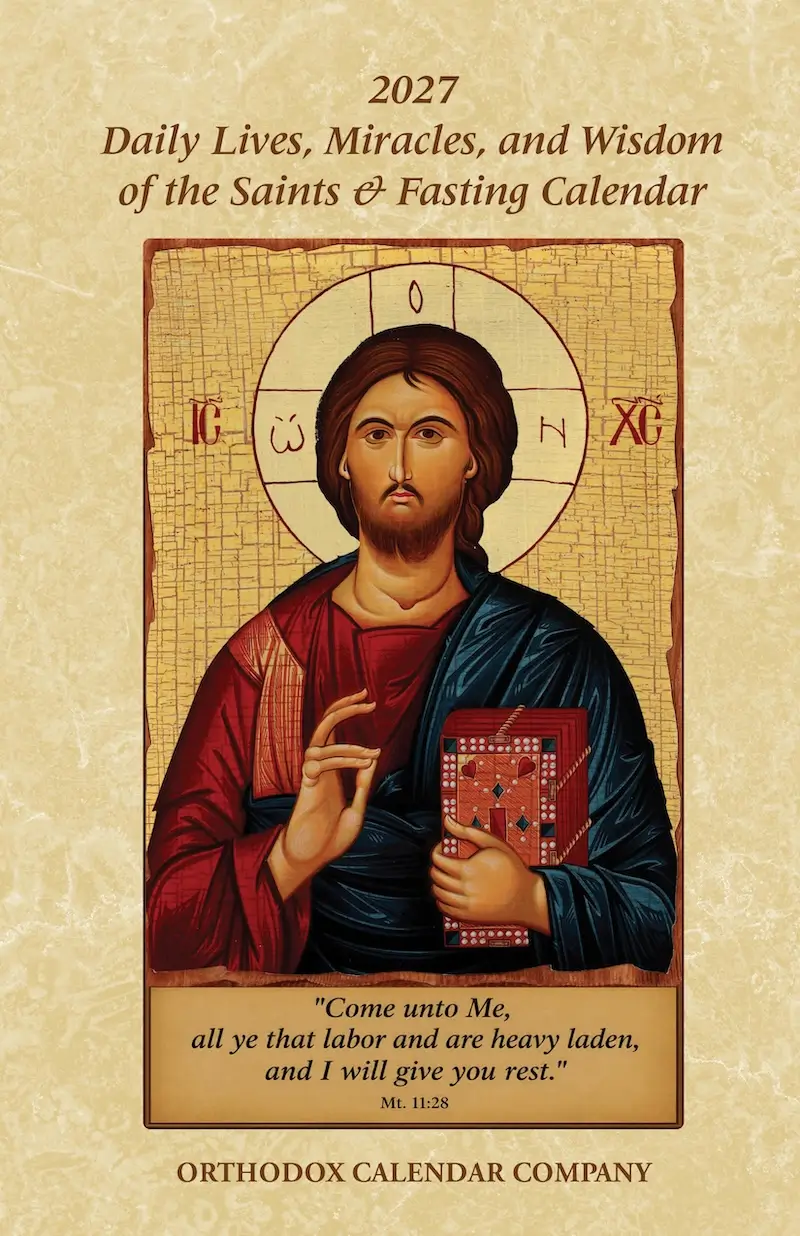
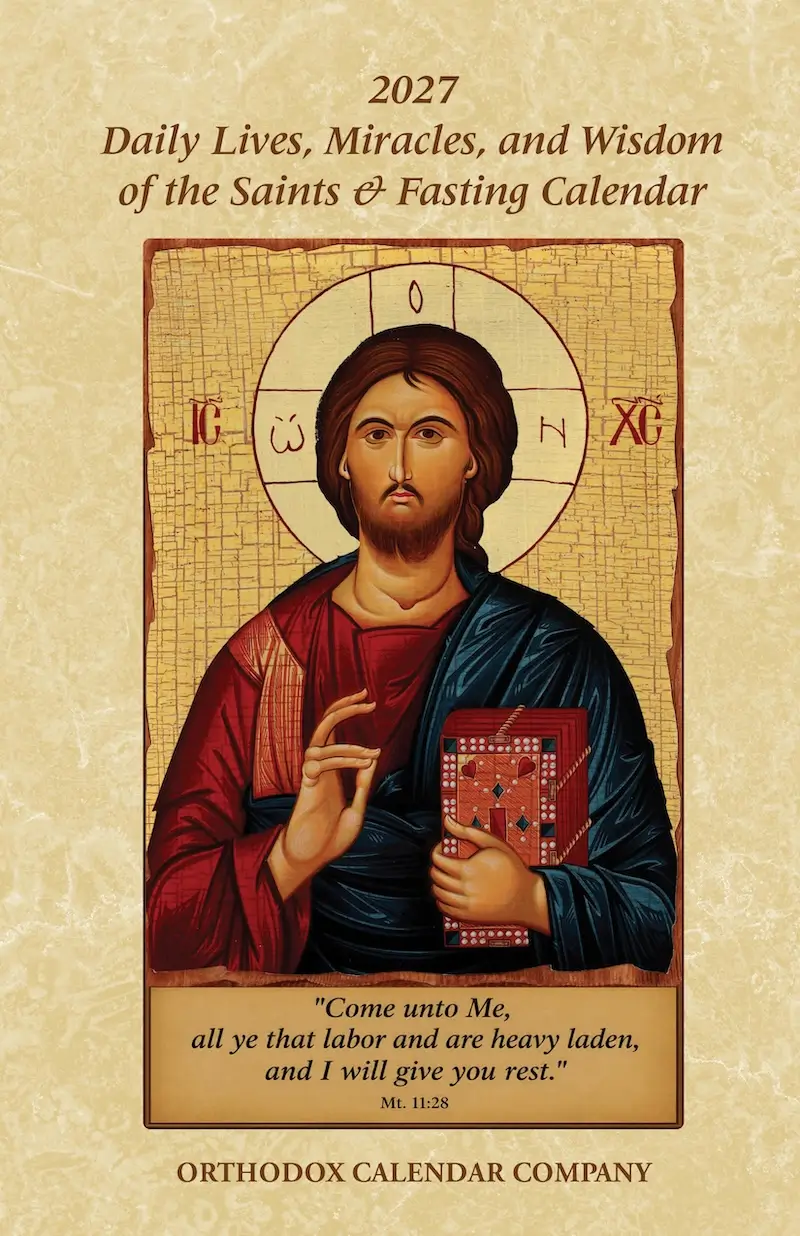
A saint, a reading, and the day's fasting guideline for every day of the year - with gifts for the icon corner beside it.
- Ships in 2–3 business days
- Secure checkout · Stripe
- Gift note at checkout
- Arrives damaged? Replaced

Also remembered in June.
- Jun 10 · Jun 23Saint Hieromartyr Timothy, Bishop of Prussa
- Jun 10 · Jun 23Saint Holy Martyr Alexander of Nicaea
- Jun 10 · Jun 23Saint Holy Martyrs Alexander and Antonina the Virgin
- Jun 11 · Jun 24Saint Apostle Barnabas
- Jun 11 · Jun 24Saint Apostle Bartholomew (also called Nathanael) of the Twelve
- Jun 11 · Jun 24Saint Mitrophan Yang
- Jun 15 · Jun 28Saint Apostle Achaicus of the Seventy
- Jun 15 · Jun 28Saint Apostle Stephen of the Seventy
- Jun 15 · Jun 28Saint Blessed Augustine, Bishop of Hippo
- Jun 15 · Jun 28Saint Great-Martyr Lazarus of Serbia
- Jun 15 · Jun 28Saint Hieromartyr Amos the Priest
- Jun 19 · Jul 2Saint Apostle Jude Thaddaeus
Read a life like this
every morning.
Meet the daily saints through Orthodox Daily Companion on iPhone and Android, or through the Lives of the Saints web app in any modern browser.
Orthodox Daily Companion
The native app for iPhone, iPad, and Android, with daily prayer reminders and a private journal.
Lives of the Saints Web App
The browser experience for desktop, tablet, or phone, with a seven-day trial of the complete devotional library.
Open the web appGet a life like this one on every new tab - free, no account, from the same catalogue.
§ SourcesReferences and further reading (20)
- orthodoxwiki.orghttps://orthodoxwiki.org/Apostle_Fortunatus
- religion.fandom.comhttps://religion.fandom.com/wiki/Apostle_Fortunatus
- oca.orghttps://www.oca.org/saints/lives/2013/06/15/100087-apostles-fortunatus-akhaikos-and-stephanas-of-the-70
- biblehub.comhttps://biblehub.com/commentaries/1_corinthians/16-17.htm
- biblicalcyclopedia.comhttps://www.biblicalcyclopedia.com/C/clement-of-rome.html
- ccel.orghttps://ccel.org/ccel/clement_rome/first_epistle_to_the_corinthians/anf01.ii.ii.lix.html
- orthochristian.comhttps://orthochristian.com/89702.html
- orthodoxwiki.orghttps://orthodoxwiki.org/Seventy_Apostles
- bibleref.comhttps://www.bibleref.com/1-Corinthians/16/1-Corinthians-16-17.html
- biblestudytools.comhttps://www.biblestudytools.com/1-corinthians/16-17.html
- bible.comhttps://www.bible.com/bible/1849/1CO.16.TPT
- biblehub.comhttps://biblehub.com/1_corinthians/16-17.htm
- bible.comhttps://www.bible.com/bible/compare/1CO.16.17-18
- esv.orghttps://www.esv.org/1+Corinthians+16:17/
- bibleref.comhttps://www.bibleref.com/biblepassage/?search=1_Corinthians_16:17-18
- orthodoxwiki.orghttps://orthodoxwiki.org/June_15
- orthodoxwiki.orghttps://orthodoxwiki.org/Apostle_Achaicus
- learn.ligonier.orghttps://learn.ligonier.org/devotionals/stephanas-fortunatus-and-achaicus
- en.wikipedia.orghttps://en.wikipedia.org/wiki/Achaichus
- religion.fandom.comhttps://religion.fandom.com/wiki/Apostle_Stephen_the_Protomartyr
More from the tradition.
Read the Journal
Essays on feasts, fasting, and the rhythm of the Church year.
ExploreOrthodox countries
How the faith is lived and kept across the Christian world.
ExploreThe 2027 Calendar
A saint, a reading, and the day's fasting guideline for every day of 2027.
ExploreMobile & web apps
Carry the daily rhythm on iPhone and Android or continue in the web app.
Explore