.avif&w=3840&q=75)
Saint Vladimir
of Kiev.
About Saint
Vladimir of Kiev
St. Vladimir of Kiev, also known as Vladimir the Great, was the Grand Prince of Kiev who led the Christianization of Kievan Rus' in 988 AD. His conversion from paganism to Christianity and his efforts to bring his entire nation into the Christian faith had a profound impact on the spiritual and cultural development of the region. St. Vladimir is venerated as a saint in the Orthodox Church for his role in establishing Christianity in Eastern Europe, particularly in Russia, Ukraine, and Belarus.
Early years
Vladimir was born around 958 AD, the youngest son of Sviatoslav I of Kiev. Initially, he ruled the principality of Novgorod, but after the death of his father and a struggle for power among his brothers, Vladimir emerged as the Grand Prince of Kiev in 980 AD. During his early reign, Vladimir was a pagan ruler known for his military prowess and the construction of pagan temples. However, he became increasingly interested in the monotheistic religions of neighboring states, particularly Christianity.
In the Church
Vladimir’s conversion to Christianity was a turning point in his life and reign. In 988 AD, he was baptized, taking the name Basil in honor of his baptismal sponsor, Byzantine Emperor Basil II. Following his baptism, Vladimir married Princess Anna, the sister of the Byzantine emperor, strengthening ties between Kievan Rus' and the Byzantine Empire. Vladimir then initiated the Christianization of Kievan Rus' by ordering the baptism of his subjects and the destruction of pagan idols. Churches were built, and the Orthodox faith became the foundation of the spiritual life of the people. This event, known as the Baptism of Rus', marked the beginning of Orthodox Christianity's influence in Eastern Europe.
Later years
After his conversion, St. Vladimir’s reign was marked by a significant transformation in his character and policies. He became known for his justice, charity, and efforts to promote Christian values in his realm. He established schools, provided for the poor, and promoted the Christian faith throughout his lands. Vladimir passed away on July 15, 1015, and was buried in the Church of the Tithes in Kiev. He was quickly recognized as a saint in the Orthodox Church for his role in converting his people to Christianity, and his feast day is celebrated on July 15.
Legacy and veneration
St. Vladimir the Great’s legacy is profound, as he is credited with laying the foundations of Christianity in the lands of Rus', which later became Russia, Ukraine, and Belarus. His decision to adopt Orthodox Christianity as the state religion shaped the religious, cultural, and political identity of Eastern Europe for centuries. St. Vladimir is honored as the "Equal-to-the-Apostles" for his missionary work and his role in establishing the Orthodox faith in his realm. His legacy continues to influence the spiritual life of the Eastern Orthodox Church, and he remains a symbol of Christian leadership and faith.
How the saint's
memory is kept.
Carry the tradition with you.
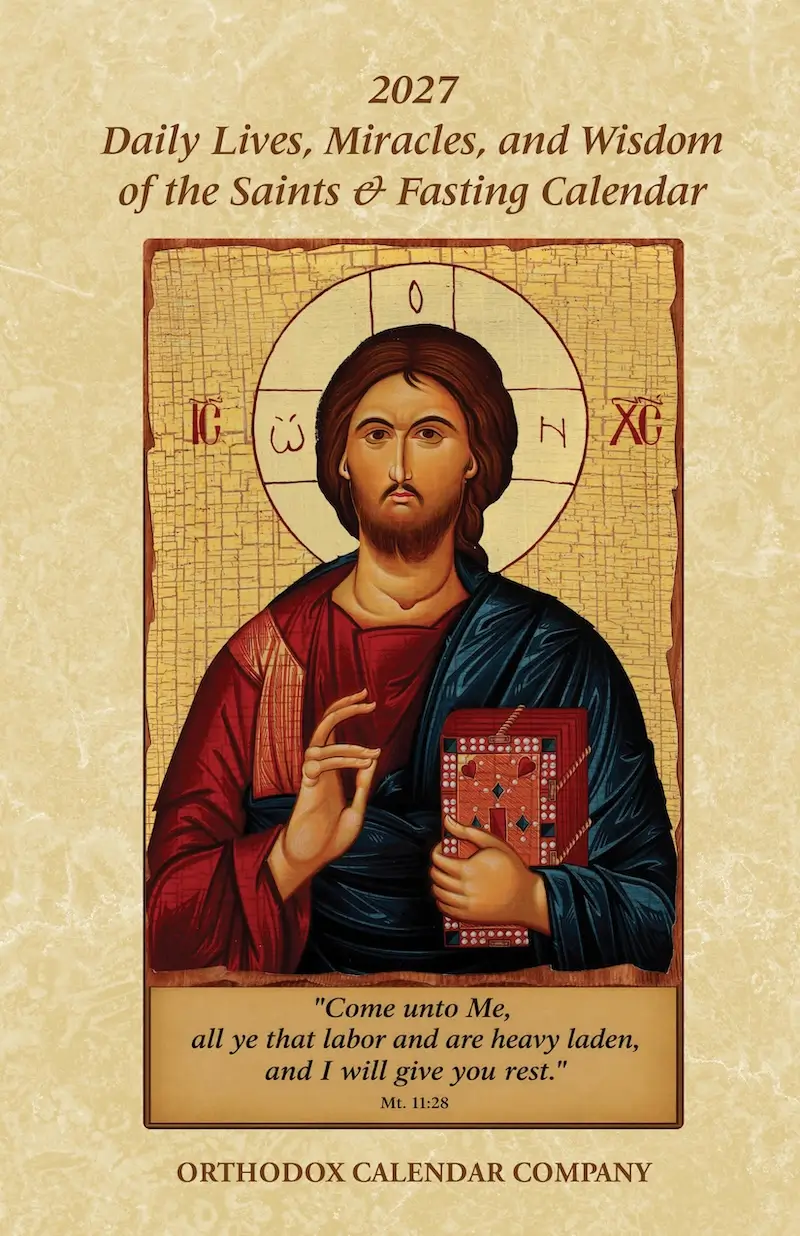
Hand-finished icons, books, and calendars to carry the Orthodox day into your home.

.avif&w=3840&q=75)
Read a life like this
every morning.
Meet the daily saints through Orthodox Daily Companion on iPhone and iPad, or through the Lives of the Saints web app in any modern browser.
Orthodox Daily Companion
The native Apple app, with a Home Screen widget, prayer reminders, and a private on-device journal.
Download on the App StoreLives of the Saints Web App
The browser experience for desktop, tablet, or phone, with a seven-day trial of the complete devotional library.
Open the web appGet a life like this one on every new tab - free, no account, from the same catalogue.
More from the tradition.
Read the Journal
Essays on feasts, fasting, and the rhythm of the Church year.
ExploreOrthodox countries
How the faith is lived and kept across the Christian world.
ExploreThe 2027 Calendar
A saint for every day of the year - now open for pre-order.
ExploreMobile & web apps
Carry the daily rhythm on iPhone and iPad or continue in the web app.
Explore