Baptism and Chrismation in Orthodoxy: Steps into the Life of Faith
Baptism, Chrismation, and Holy Communion - the three pillars of Orthodox Christian initiation. Why are they all given together? What happens after? Find out how these sacred sacraments transform faith into a lifelong journey.
Entry details
- Published
- February 4, 2025
- Reading time
- 5 min read
“For as many of you as have been baptized into Christ have put on Christ.” – Galatians 3:27
Orthodox Christianity is not merely a circumcision; baptism is the initiation into the Orthodox Christian faith. It is the time when one does not only watch the ongoings but is accepted as a member of this family of God. However, baptism is not the end of it all. After that comes Chrismation, the “sacrament of sealing of the gift of the Holy Spirit,” which strengthens the newly made neophyte for his Christian mission. These sacraments of initiation are ancient, strong, and effective in producing a positive change.
Orthodox Baptism and Chrismation involves the following: What are they to the believer and how do they define the path of faith? Here are these steps, let us go through them because they form an integral part of the Eastern Orthodox Christianity that one has to grasp:
The Threefold Immersion: Dying and Rising with Christ
Baptism in the orthodox church is no mere rite of water sprinkling. It is a submersion to the water and not just once, but thrice. Why? This is because the Lord was in the tomb for three days and through this sacrament, we are made to partake in his death and burial as well as his resurrection.
The priest immerses the catechumen (the one being baptized) into the baptismal water, saying:
[The Baptized's name] the servant of God is baptized in the Name of the Father, and of the Son, and of the Holy Spirit. Amen."
This is not a re-staging. It is a sacramental involvement in the victory over sin and death. The old man passes away and a new one is created. The newly baptized is given white garments, as at that moment the soul has no blemish, as it was liberated from the sins.
Who Can Be Baptized?
As for the baptism in the Orthodox Christian Church, both children and adults are baptized. In the case of infants, the godparents stand for them and reject Satan while affirming faith in Christ. In the case of the adults, there is a period of learning known as catechism before they are baptized.
Chrismation: The Seal of the Holy Spirit
Baptism cleanses. But Chrismation empowers.
After the baptism, the priest uses holy chrism to make the cross on the head, eyes, ears, heart, hands, and feet of the baptized person. Every anointing is followed by the words:
"The seal of the gift of the Holy Spirit."
This is similar to the confirmation in other Christian churches but in Orthodoxy it is done in conjunction with the baptism. The reason? In Christian theology, Baptism and Chrismation are always seen as two acts that cannot be separated. Likewise, as the Apostles received the Holy Spirit during the feast of Pentecost, every Orthodox Christian receives the same through the Sacrament of Chrismation.
What is Holy Chrism?
It is not just any oil that you would find in the market today; it has a special significance within the annals of Christianity. It is a sweet-smelling oil, the production of which involves the blending of olive oil and fifty-seven different spices, which can be prepared only by the Ecumenical Patriarchate of Constantinople and is supplied to all Orthodox Church all over the world. Preparing the Holy Chrism takes time and care, in some cases it may take several days in order to complete the process.
The anointing of Chrism is the time when Holy Spirit enters the soul and becomes a part of it. This is why Chrismation is sometimes called the “Orthodox Confirmation - but in fact it is much more. It is a personal Pentecost for every Orthodox Christian.
You might also like - The Twelve Great Feasts of the Orthodox Church: Their Meaning and Observances
First Communion: The Immediate Union with Christ
In most of the Christian denominations, there is a chasm between baptism and the Holy Communion. Not so in Orthodox faith. As soon as a person is Chrismated, he receives the Holy Eucharist; the infant even does so.
Why? Because baptism and Chrismation give the person a chance to be an active member of the Orthodox Church. The Eucharist is not a reward for “understanding” but the food for the soul. For this reason the Orthodox Church, as was said above, enforces the reception of all three initiation sacraments at one time:
Baptism – Spiritual rebirth
Chrismation – Receiving the Holy Spirit
Holy Communion – Full participation in Christ
What Happens After? Living the Orthodox Christian Life
Baptism and Chrismation are not the end - they are the beginning. The person is now a baptized member of the Orthodox Church, but faith is a way of life which needs to be practiced every day.
Here are three aspects by which one can grow after Baptism and Chrismation:
Prayer & Worship – It is required to attend Divine Liturgy and to pray daily. For instance, one can use a prayer rope to repeat the Jesus Prayer which is “Lord Jesus Christ, Son of God, have mercy on me, a sinner.”
Scripture & Saints – The Orthodox faith is full of knowledge. Referring to the Lives of the Saints (for instance the 2025 Lives of the Saints Calendar) keeps faith alive by following the examples of the role models.
Fasting and Confession – Eating is one of the necessities of life and therefore fasting is one form of self denial that is essential in spiritual life. Fasting seasons and going to Confession assist in making the soul suitable for the journey of a Christian.
Dive further into - Top 5 Orthodox Christian Devotional Books for Daily Prayer
Final Thoughts: More Than a Ceremony
Baptism and Chrismation are not just rituals. They are profound, life-altering moments in Orthodox Christian rites that place a person on the road to salvation. They are entrances into the Kingdom of God, where sin is washed away, the Holy Spirit is received, and a new life begins.
Whether you are preparing for Orthodox Baptism, attending a baptism, or simply deepening your understanding of Eastern Orthodox Christianity, these sacraments stand as a powerful reminder that faith is not merely believed - it is lived.
If you are on this journey, consider deepening your faith with the Wisdom of the Divine Philosophers series or our Orthodox Calendar - daily companions in walking the path of the saints.
Your journey has begun. Now walk it with faith.
Carry the reading home.
Chosen from our shelves to go with what you've just read.
- Ships in 2–3 business days
- Secure checkout · Stripe
- Gift note at checkout
- Arrives damaged? Replaced
- № 02
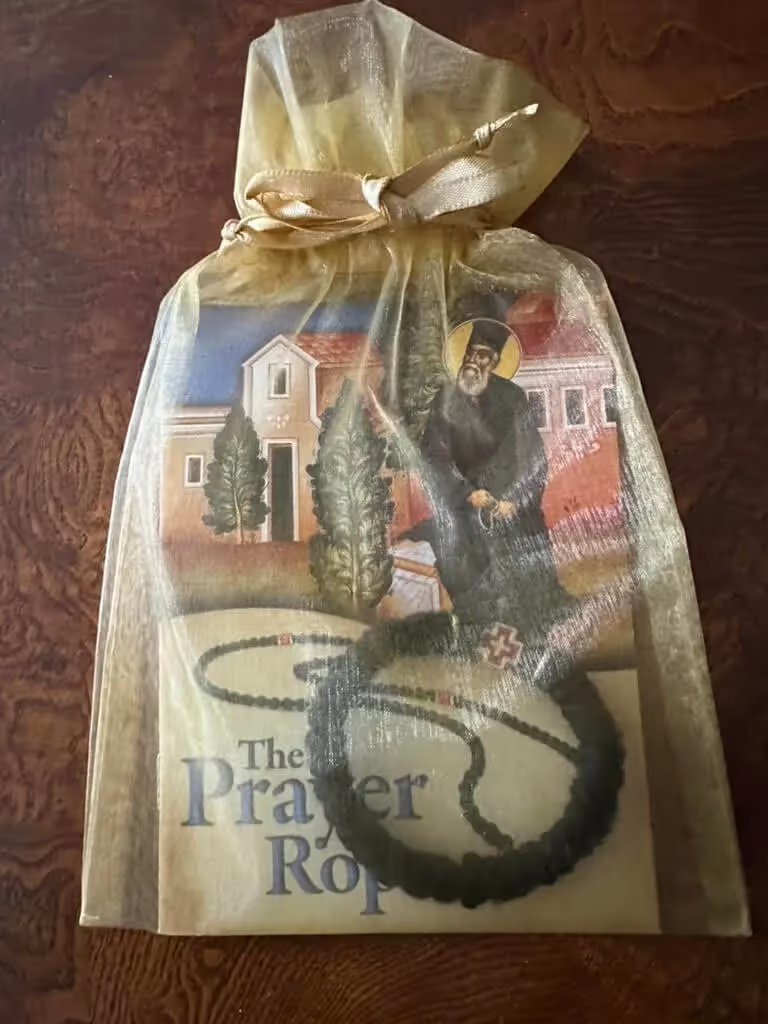
Orthodox Prayer Rope Gift Set
A traditional Orthodox tool for praying the Jesus Prayer and cultivating the prayer of the heart
From$21.50Choose edition - № 03
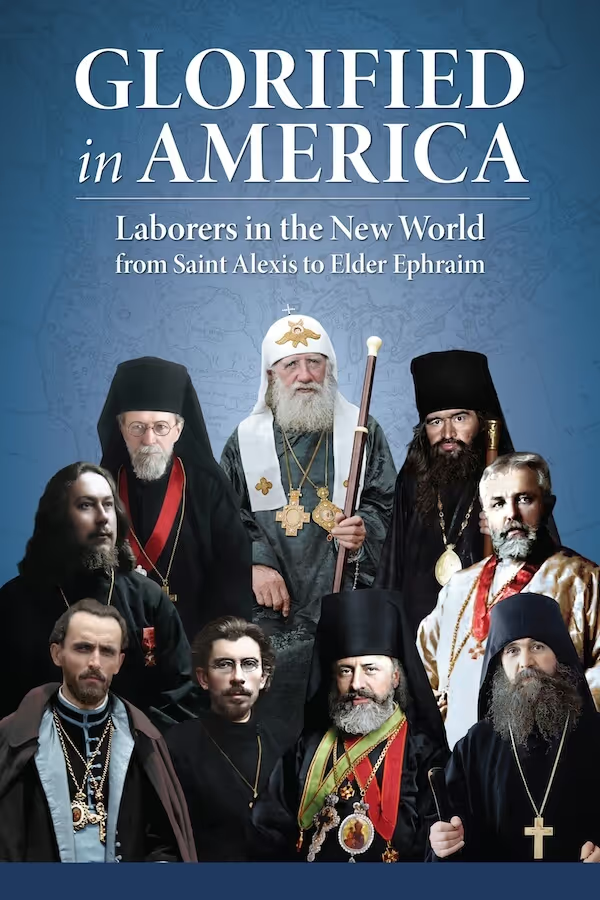
Glorified in America: Laborers in the New World from St. Alexis to Elder Ephraim
Lives and legacies of the saints and elders who planted Orthodoxy in America
$40.00Open
.avif&w=3840&q=75)
Continue the rhythm
of the Orthodox day.
Daily scripture, saints, and patristic wisdom - in the new native Apple companion or the browser-based web app.
Orthodox Daily Companion
The native Apple app, with a Home Screen widget, prayer reminders, and a private on-device journal.
Download on the App StoreLives of the Saints Web App
The browser experience for desktop, tablet, or phone, with a seven-day trial of the complete devotional library.
Open the web appFresh from the journal - newly published.
- Journal30Nov
Mount Sinai in Orthodox Christianity: Where Heaven Meets Earth
Discover why Mount Sinai stands as a profound symbol in Orthodox Christianity, representing the divine meeting point between God and humanity.
Read article - Journal01Mar
The Holy Fire Miracle in Jerusalem: A Testament of Faith for Orthodox Christians
Every Orthodox Holy Saturday in Jerusalem, an unexplainable flame emerges from Christ's tomb. This Holy Fire isn't just tradition; it's a living testament to faith, inviting believers worldwide to witness and reflect on its profound significance.
Read article - Journal01MarOrthodox Saints
The Life and Legacy of Saint Basil the Great: A Pillar of Orthodox Theology
Did you know Saint Basil defended the Trinity during a time of great heresy? His writings on the Holy Spirit and creation still inspire Orthodox theology. Learn about his contributions to faith and his lasting influence on the Church.
Read article
Keep reading the tradition.
Meet the saints
Martyrs, ascetics, and wonderworkers - the lives behind the feasts.
ExploreOrthodox countries
How the faith is lived and kept across the Christian world.
ExploreMobile & web apps
Carry the daily rhythm on iPhone and iPad or continue in the browser-based web app.
ExploreThe 2027 Calendar
A saint, a reading, and the day's fasting guideline for every day of 2027.
Explore