Lebanon.
Lebanon is home to the ancient Greek Orthodox Patriarchate of Antioch and All the East, whose faithful - often called Rūm Orthodox - form the country's second-largest Christian community and a cornerstone of Lebanese Christianity.
Orthodoxy in
Lebanon.
A living tradition - its history, its faithful, its sacred places.
Eastern Orthodox Christianity in Lebanon
Eastern Orthodoxy in Lebanon is one of the most ancient continuous expressions of the Christian faith anywhere in the world. The Lebanese Orthodox faithful belong to the Greek Orthodox Patriarchate of Antioch and All the East, an autocephalous Eastern Orthodox church that traces its origin to the historical Church of Antioch founded by the apostles Peter and Paul. Though the patriarchal see is today located in Damascus, Syria, Lebanon contains the largest concentration of the patriarchate's parishes, faithful, institutions, and monasteries.
Historical presence
Orthodox Christianity in the lands that now form Lebanon dates to apostolic times, predating the schisms that later produced the Maronite, Melkite Catholic, and Syriac Orthodox communities. The Byzantine-rite Christians of the coast - Beirut, Byblos, Tripoli, and the Koura - remained in communion with Constantinople after the great christological controversies of the fifth century. In the Crusader period, Latin rulers built and endowed several important houses, including the Monastery of Our Lady of Balamand, which was later restored to the Orthodox Church. In the Ottoman era, the community was organized as part of the Rūm millet, preserving its Byzantine liturgical inheritance while gradually adopting Arabic as its liturgical and spoken tongue.
Modern jurisdiction
Today the Orthodox of Lebanon are organized in several archdioceses of the Patriarchate of Antioch, including the Archdiocese of Beirut, the Archdiocese of Mount Lebanon (Byblos and Botris), the Archdiocese of Tripoli, Al-Koura and Dependencies, the Archdiocese of Akkar, and the Archdiocese of Zahle and Baalbek. The current primate of the mother church is His Beatitude Patriarch John X (Yazigi), elected in December 2012 at the Balamand Monastery. The University of Balamand, founded in 1988 by the patriarchate, and its St John of Damascus Institute of Theology are the main educational and theological centers of Antiochian Orthodoxy worldwide.
Civil life and the confessional system
Lebanon's unique confessional political system guarantees the Greek Orthodox community specific seats in parliament and positions in the state, and historically the Deputy Prime Minister has come from this community. The Orthodox thus play a role in civic life disproportionate to their numerical size, and they are known for supporting a pluralistic, Arab-Christian vision of Lebanese society. The community has also suffered greatly - from the Lebanese Civil War (1975–1990), the 2006 war, the 2020 Beirut port explosion that damaged the historic cathedral precinct, and the ongoing economic collapse, which has accelerated emigration.
Current state
Despite demographic pressures, the Orthodox Church in Lebanon remains vibrant: monastic revival at sites such as Hamatoura and Balamand, active parish life in Beirut and the north, a strong publishing and educational presence, and deep engagement with the worldwide Antiochian diaspora, particularly in North and South America, Europe, and Australia.
Saints of
Lebanon.
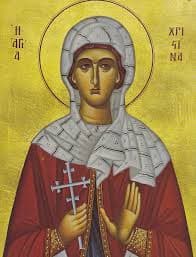
1 venerated soul with ties to this land - fathers and mothers of the faith who are remembered here still.
Famous Orthodox churches and monasteries in Lebanon
The sacred architecture of Orthodox Lebanon - cathedrals, parishes, and the mountain monasteries that keep the lamps burning.
- Saint George Greek Orthodox Cathedral, Beirut - The mother cathedral of the Greek Orthodox Archdiocese of Beirut, consecrated in its present form in 1764 and among the oldest church sites in the city. Archaeological work in 1994 revealed layers of earlier churches built above a cavern traditionally associated with Saint George.
- Monastery of Our Lady of Balamand (Deir Sayyidat al-Balamand), Koura - Founded in 1157 during the Crusader period as the Cistercian abbey of Belmont and restored to the Orthodox Church after the Crusaders' departure. It is today a patriarchal stauropegial monastery and houses the St John of Damascus Institute of Theology and the University of Balamand.
- Monastery of Our Lady of Hamatoura, Kousba (Koura) - A Dormition of the Theotokos monastery dramatically perched on a cliff above the Qadisha valley. Destroyed several times in history and revived in modern times, it is a major center of Orthodox monastic renewal in Lebanon.
- Monastery of Saint Elias, Shwayya - A patriarchal monastery in Mount Lebanon with a historic school that educated generations of Antiochian clergy before suffering heavy damage during the Lebanese Civil War and being subsequently restored.
- Monastery of Our Lady of Natour (Deir Sayyidat al-Natour), Anfeh - A coastal monastery dedicated to the Theotokos, dating to the Crusader era (12th century) and today a dependency associated with the Balamand community.
- Cathedral of Saint George, Tripoli / Al-Mina - The episcopal church of the Archdiocese of Tripoli, Al-Koura and Dependencies, serving the historic Orthodox heartland of northern Lebanon.
Orthodoxy
kept here.
The shape of the faith as it is lived and prayed across Lebanon today.
The Orthodox Christians of Lebanon belong to the Greek Orthodox Patriarchate of Antioch and All the East, an autocephalous Eastern Orthodox church in full communion with Constantinople, Moscow, Jerusalem, and the other canonical Orthodox churches. Although the common designation "Greek Orthodox" reflects adherence to the Byzantine (Constantinopolitan) rite, the vast majority of the faithful are Arab by language and culture, and the community is often called Rūm Orthodox ("Roman Orthodox") - a legacy of the Eastern Roman (Byzantine) heritage.
The principal liturgical language is Arabic, with portions of services (such as key hymns and the exclamations) often retained in Byzantine Greek. Chant follows the Byzantine oktoechos tradition, sung in both the classical Byzantine and Arabic-adapted forms. Parishes are served by a married and celibate clergy trained largely at the St John of Damascus Institute of Theology at the Balamand Monastery.
Under Lebanon's confessional system the Greek Orthodox are recognized as one of the country's principal religious communities, with reserved seats in parliament and in public administration. Relations with the Lebanese state are cordial, and the community is traditionally associated with a moderate, Arab-nationalist and pluralist political stance. Strong historical ties link Lebanese Orthodoxy to its co-religionists in Syria and to the large Antiochian diaspora, especially the Antiochian Orthodox Christian Archdiocese of North America, which falls under the same patriarchate.
Emigration over the past century - driven by war, economic crisis, and the collapse of the Lebanese lira - has produced a diaspora that in many places now outnumbers the faithful in Lebanon itself. Nevertheless, Lebanon remains the beating heart of Antiochian Orthodoxy in terms of monasteries, theological formation, and ecclesial institutions.
Asked
of this land.
Frequently asked questions about Orthodoxy in Lebanon
Which Orthodox Church do Lebanese Orthodox Christians belong to?
They belong to the Greek Orthodox Patriarchate of Antioch and All the East, an autocephalous Eastern Orthodox Church whose patriarchal see is in Damascus, Syria. It is fully in communion with Constantinople and the other canonical Orthodox churches.
Are Lebanese Greek Orthodox ethnically Greek?
No. Although the church is called "Greek Orthodox" because it follows the Byzantine (Constantinopolitan) rite, the faithful are overwhelmingly Arab by language and identity. They are sometimes called Rūm ("Roman") Orthodox, reflecting the Byzantine (Eastern Roman) heritage of their church.
What language is used in the Divine Liturgy in Lebanon?
Arabic is the principal liturgical language, with some parts of the services - particularly traditional Byzantine chant - still sung in Greek. Many parishes use a mixture of the two.
How large is the Eastern Orthodox community in Lebanon?
Reliable estimates place Lebanese Greek Orthodox at roughly 8% of the population, making them the second-largest Christian community in the country after the Maronites. Because Lebanon has not conducted an official census since 1932, precise numbers are not available.
Are Oriental Orthodox churches (such as the Armenian or Syriac Orthodox) the same as Eastern Orthodox?
No. The Armenian Apostolic and Syriac Orthodox churches have a significant presence in Lebanon, but they belong to the Oriental Orthodox communion, which has been distinct from the Eastern (Chalcedonian) Orthodox since the fifth century. Only the Patriarchate of Antioch represents Eastern Orthodoxy in Lebanon.
Who is the current Patriarch of Antioch?
His Beatitude John X (Yazigi) has served as Patriarch of Antioch and All the East since his election at the Balamand Monastery on 17 December 2012.
More from the tradition.
Meet the saints
The lives behind the icons, calendars, and books we print.
ExploreRead the Journal
Essays on feasts, fasting, and the rhythm of the Church year.
ExploreThe 2027 Calendar
A saint for every day of the year - now open for pre-order.
ExploreMobile & web apps
Carry the daily rhythm on iPhone and iPad or continue in the web app.
Explore