Greece.
Greece is a majority-Orthodox nation where the autocephalous Church of Greece, together with jurisdictions of the Ecumenical Patriarchate, shapes national life, liturgy, and identity.
Orthodoxy in
Greece.
A living tradition - its history, its faithful, its sacred places.
Greece is one of the historic heartlands of Eastern Orthodox Christianity. The Greek-speaking world embraced the Christian faith from the apostolic age - St. Paul preached in Corinth, Athens, Philippi, and Thessalonica - and after the Great Schism of 1054 the churches of the Greek East continued in what today is called the Eastern Orthodox communion.
From Ottoman rule to autocephaly
For centuries under Ottoman rule, the Greek lands fell under the pastoral care of the Ecumenical Patriarchate of Constantinople. After the Greek War of Independence, the newly established Kingdom of Greece unilaterally declared the Greek Church autocephalous in 1833, a status recognized by the Ecumenical Patriarch in 1850. The Church of Greece emerged with the founding of the autocephalous Orthodox Church in Greece in 1850, having previously been an integral part of the Ecumenical Patriarchate of Constantinople.
Jurisdictional structure
Greek Orthodox ecclesiastical territory is not administered by a single body. The Church of Greece is organized into 81 dioceses, of which 36 - in northern Greece and the major islands of the north and northeast Aegean - are nominally and spiritually under the jurisdiction of the Ecumenical Patriarchate as the so-called "New Lands," though administered by Athens. Crete and the Dodecanese Islands remain fully under the Ecumenical Patriarchate. Mount Athos, the self-governing monastic republic on the Chalkidiki peninsula, is likewise under the spiritual jurisdiction of Constantinople while forming part of the Greek state.
Mount Athos and monasticism
Mount Athos has been an Orthodox spiritual centre since the 10th century, self-administered since Byzantine times, its first constitution signed in 972 by the emperor John I Tzimiskes. It is home to twenty sacred monasteries, including Greek, Serbian, Bulgarian, and Russian houses, and remains the most important living center of Orthodox monasticism in the world. Together with Meteora, Patmos, and countless island and mainland monasteries, Greece preserves a continuous monastic tradition reaching back more than a millennium.
The Church today
The Church of Greece is led by His Beatitude Ieronymos II, Archbishop of Athens and All Greece and Primate of the Autocephalous Orthodox Church of Greece, who has held the see since 2008. Orthodoxy is woven into civic life: major feasts are national holidays, the Greek constitution names the Eastern Orthodox Church of Christ as the "prevailing religion," and parish life remains central to local culture in villages and cities alike. While secularization has affected regular church attendance, Greek identity and Orthodox faith remain deeply intertwined.
Saints of
Greece.
8 venerated souls with ties to this land - fathers and mothers of the faith who are remembered here still.
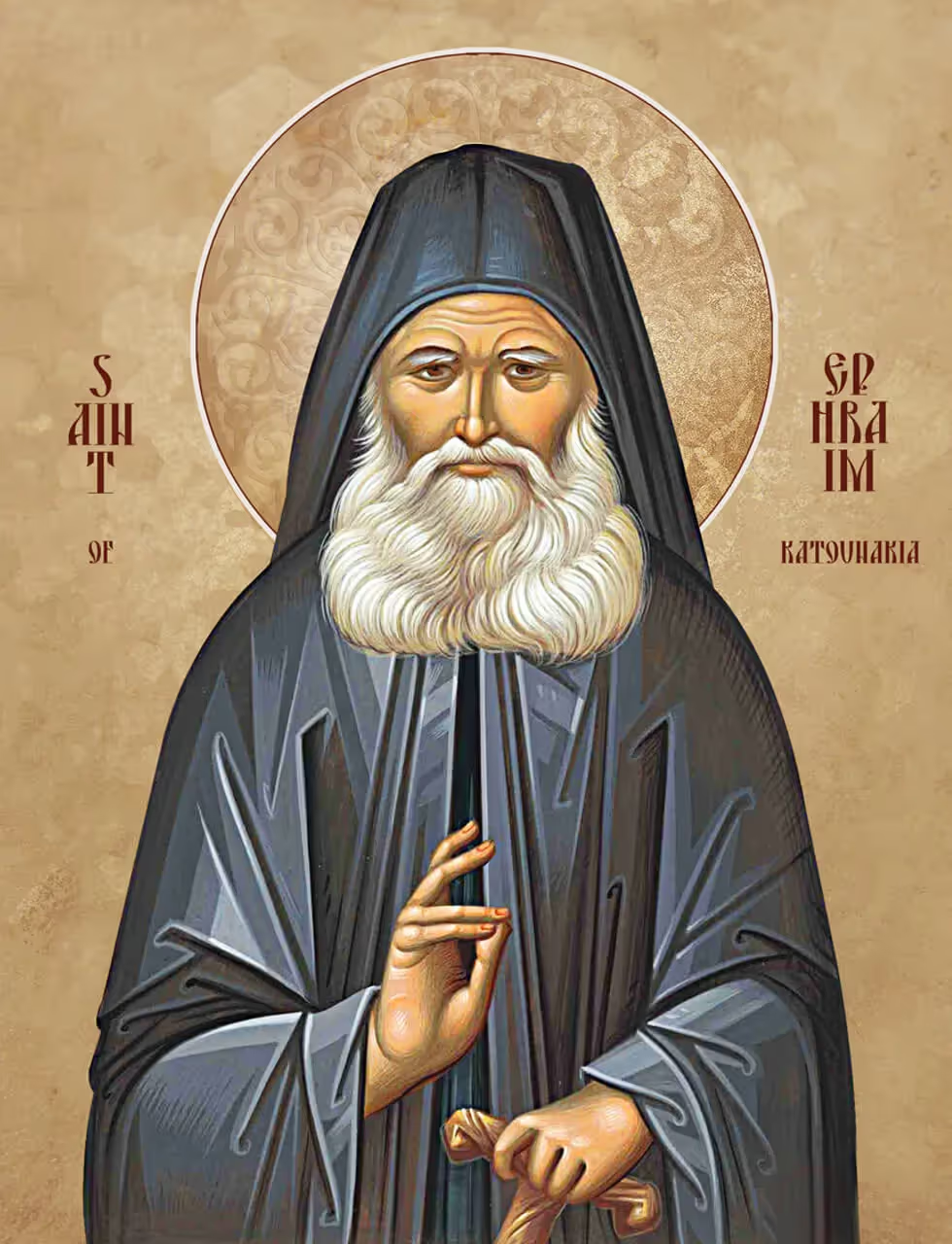
Saint Ephraim of Katounakia
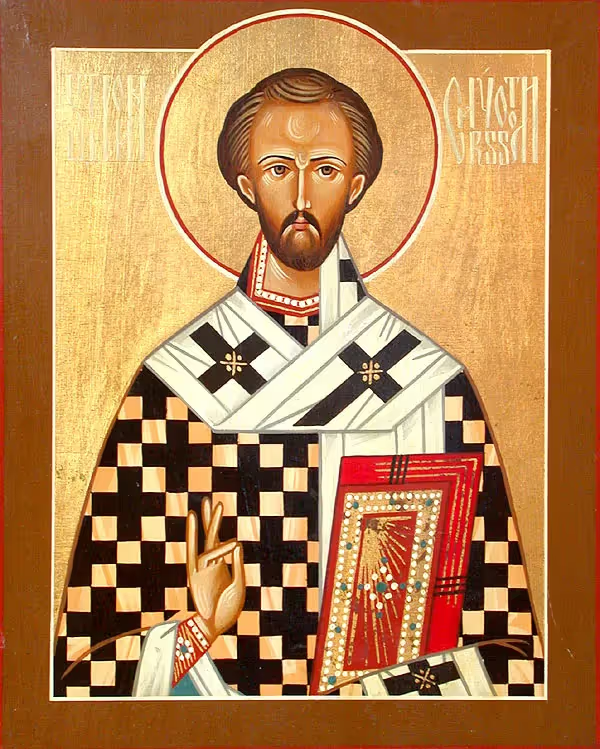
Saint John Chrysostom
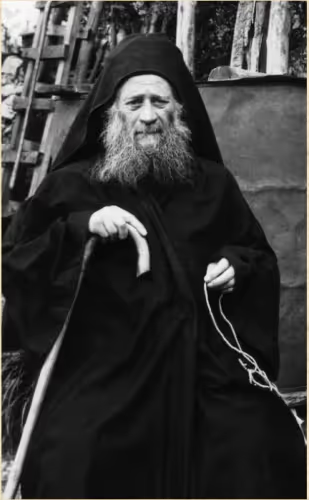
Saint Joseph the Hesychast
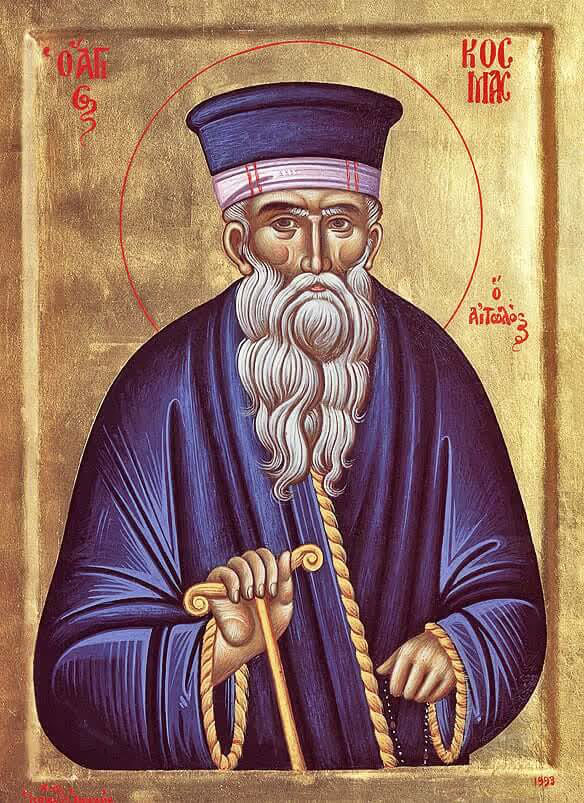
Saint Kosmas the Aetolian
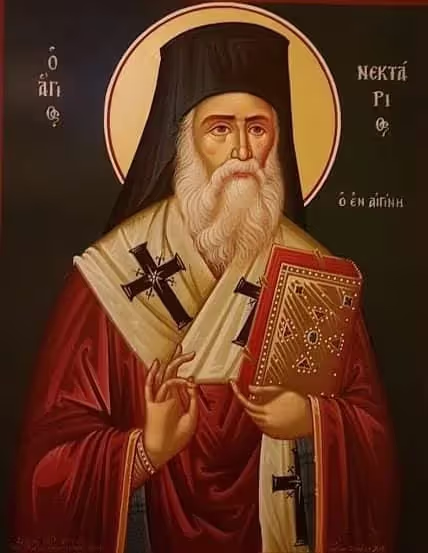
Saint Nektarios of Aegina, Metropolitan of Pentapolis
Saint Nektarios (1846–1920) was Metropolitan of Pentapolis under the Patriarchate of Alexandria and the beloved wonderworker of Aegina, renowned for his holiness, humility, and c…
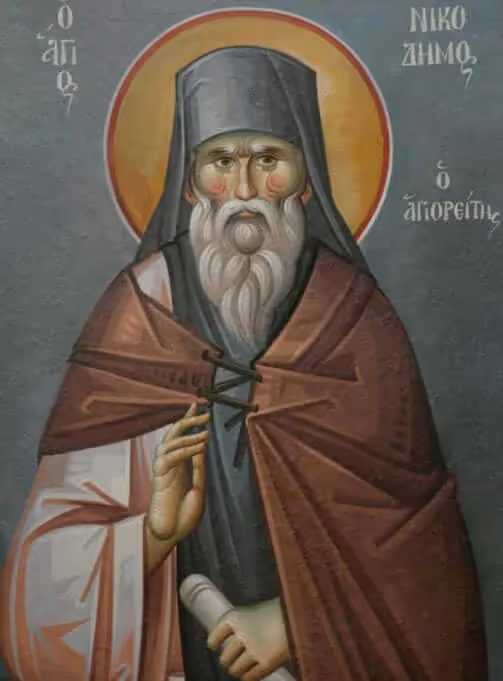
Saint Nicodemus the Hagiorite
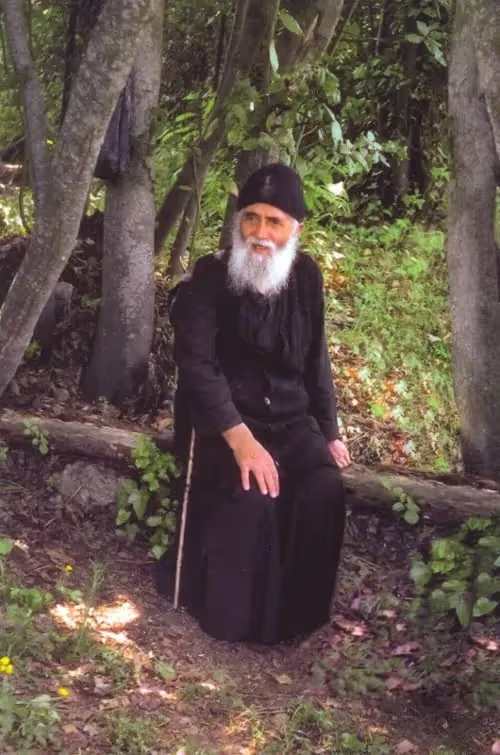
Saint Paisios the Athonite
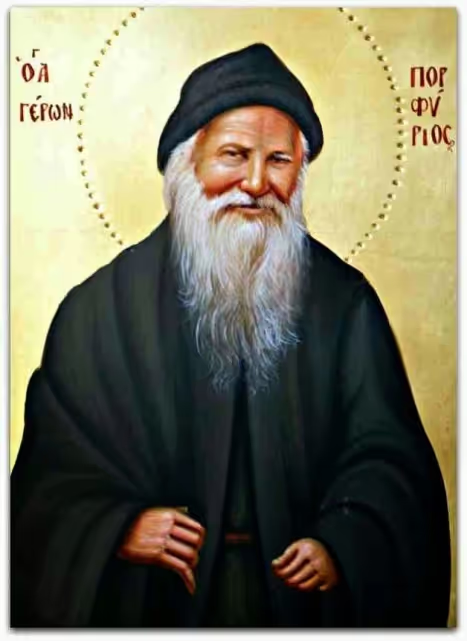
Saint Porphyrios of Kafsokalyvia
Famous Orthodox churches and monasteries in Greece
The sacred architecture of Orthodox Greece - cathedrals, parishes, and the mountain monasteries that keep the lamps burning.
- Metropolitan Cathedral of the Annunciation, Athens - The principal cathedral of the Church of Greece, built on the initiative of King Otto I. Construction began in 1842 and the church was completed in 1862; it is dedicated to the Annunciation of the Theotokos.
- Hagia Sophia, Thessaloniki - A great Byzantine church dedicated to Holy Wisdom, built in its present cross-domed form in the late 7th–8th century on the site of an earlier basilica. It is a UNESCO World Heritage monument and a functioning Orthodox parish.
- Monastic Community of Mount Athos - Twenty ruling monasteries including Great Lavra, Vatopedi, Iviron, Hilandar (Serbian), Zograf (Bulgarian), and St. Panteleimon (Russian), continuously inhabited by Orthodox monks for over a thousand years.
- Monasteries of Meteora - Perched atop towering sandstone pillars in Thessaly, six active Orthodox monasteries remain from twenty-four that flourished at their 16th-century peak, including the Monastery of the Holy Trinity (Agia Triada).
- Panagia Ekatontapiliani, Parikia (Paros) - The "Church of the Hundred Doors," a historic Byzantine complex dedicated to the Theotokos, regarded as one of the oldest and most significant Byzantine monuments in Greece.
- Monastery of Saint John the Theologian, Patmos - Founded in 1088 on the island where St. John received the Apocalypse; a major pilgrimage site under the Ecumenical Patriarchate and a UNESCO World Heritage Site.
Orthodoxy
kept here.
The shape of the faith as it is lived and prayed across Greece today.
Orthodoxy in Greece is overwhelmingly the religion of the population. A 2022 U.S. State Department report estimated that 81% to 90% of respondents identified as Greek Orthodox, and the Pew Research Center numbers Greece among the fourteen Orthodox-majority countries, with roughly 10 million Orthodox Christians.
The liturgical language is Greek - specifically the Koine Greek of the New Testament and the elevated ecclesiastical Greek of the Byzantine hymnographers. Services follow the Byzantine Rite in its received Greek form, with Byzantine chant rather than polyphony. The Julian Old Calendar is used only by the small "Old Calendarist" communities outside the canonical Church; the Church of Greece itself follows the Revised Julian calendar for fixed feasts, with Pascha computed according to the traditional Orthodox paschalion.
Three canonical jurisdictions coexist within Greek territory: the autocephalous Church of Greece (Archbishopric of Athens and the southern dioceses, plus the administratively integrated New Lands), the Ecumenical Patriarchate (Crete as a semi-autonomous church, the Dodecanese metropolises, and Mount Athos), and the autonomous monastic polity of the Holy Mountain. Relations among them are close and concelebrating.
The Greek Orthodox diaspora - in the United States, Australia, Germany, the United Kingdom, Canada, and elsewhere - is pastored overwhelmingly by archdioceses and metropolises of the Ecumenical Patriarchate rather than by the Church of Greece, reflecting the Patriarchate's canonical role over the Orthodox abroad.
Asked
of this land.
Frequently asked questions about Orthodoxy in Greece
Is the Church of Greece autocephalous?
Yes. The Greek state proclaimed the Church autocephalous in 1833, and the Ecumenical Patriarchate of Constantinople formally recognized its autocephaly in 1850 through a Patriarchal Tomos.
Who is the head of the Church of Greece?
The primate is the Archbishop of Athens and All Greece. Since 2008 this office has been held by His Beatitude Ieronymos II (Ioannis Liapis), born in 1938 in Oinofyta, Boeotia.
Are all of Greece's Orthodox churches under Athens?
No. Mount Athos, the Church of Crete, and the metropolises of the Dodecanese are under the Ecumenical Patriarchate of Constantinople. The dioceses of the "New Lands" in northern Greece and the northeast Aegean remain canonically under Constantinople but are administered by the Church of Greece.
What language is used in the Divine Liturgy?
Services are celebrated in Greek - primarily the Koine Greek of the New Testament and Byzantine ecclesiastical Greek - accompanied by traditional Byzantine chant.
How many Orthodox Christians live in Greece?
Pew Research Center estimates approximately 10 million, and the great majority of the Greek population self-identifies as Orthodox.
What is Mount Athos?
Mount Athos is a self-governing monastic community on the Chalkidiki peninsula, home to twenty ruling monasteries. It has been an Orthodox spiritual center since the 10th century and retains a special autonomous status under the Ecumenical Patriarchate while remaining part of the Greek state.
More from the tradition.
Meet the saints
The lives behind the icons, calendars, and books we print.
ExploreRead the Journal
Essays on feasts, fasting, and the rhythm of the Church year.
ExploreThe 2027 Calendar
A saint, a reading, and the day's fasting guideline for every day of 2027.
ExploreMobile & web apps
Carry the daily rhythm on iPhone and iPad or continue in the web app.
Explore