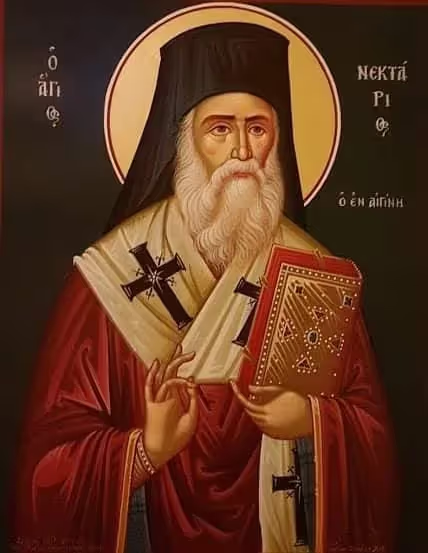
Saint Nektarios
of Aegina, Metropolitan of Pentapolis.
Also known as Saint Nectarios of Pentapolis, Saint Nectarius Kephalas, Saint Nektarios the Wonderworker, Hagios Nektarios, Άγιος Νεκτάριος Πενταπόλεως, Saint Nektarios of Aegina, Anastasios Kephalas
Saint Nektarios (1846–1920) was Metropolitan of Pentapolis under the Patriarchate of Alexandria and the beloved wonderworker of Aegina, renowned for his holiness, humility, and countless healings - especially of cancer.
Tone 1
O faithful, let us honor Nektarios the divine servant of Christ,
offspring of Silyvria and guardian of Aegina,
who appeared in these last times as a true friend of virtue,
pouring forth all manner of healing upon those who reverently cry:
Glory to Him who gave you strength!
Glory to Him who granted you a crown!
Glory to Him who through you grants healing to all!
The Wonderworker
of Aegina
Saint Nektarios is beloved throughout the Orthodox world as a modern-day wonderworker whose life combined rigorous learning, profound humility, and deep pastoral love. Though unjustly slandered and stripped of his episcopal duties, he bore every injustice in silence and turned his energies to teaching, monastic foundation, and prayer. He is especially invoked by the sick, and countless healings - particularly from cancer - have been reported through his intercession.
Early years
The future saint was born Anastasios Kephalas on October 1, 1846, in Selybria, Thrace, to Demos and Vassiliki Kephalas, pious but poor Christians who raised a large family. From infancy he displayed a serious love of prayer and learning; his mother is said to have taught him Psalm 50, which he loved to recite aloud.
At about the age of fourteen Anastasios left Thrace for Constantinople to find work and continue his studies. Employed first in a tobacco shop, he copied out fragments of Scripture and the Fathers on the paper used to wrap goods, hoping the words would profit his customers. Later, he moved to the island of Chios, where he taught school for several years before entering the ancient monastery of Nea Moni, being tonsured a monk and given the name Lazarus, and then, on his ordination to the diaconate in 1876, the name Nektarios.
In the Church
A benefactor recognized the young deacon's gifts and sent him to complete his education, first at a gymnasium in Athens and then at the Faculty of Theology of the University of Athens, where he graduated in 1885. Patriarch Sophronius of Alexandria took him under his patronage, ordained him to the priesthood, and appointed him to important offices in the Patriarchate. On January 15, 1889, Nektarios was consecrated Metropolitan of Pentapolis, an ancient titular see in Libya under the Patriarchate of Alexandria.
His learning, gentleness, and popularity among the Orthodox faithful of Egypt soon excited the jealousy of certain members of the patriarchal court, who accused him of ambitions against the patriarchal throne. Without trial or canonical hearing, he was relieved of his duties and expelled from Egypt. The saint never spoke a word in his own defense; he departed in silence, bearing his humiliation as a cross for the rest of his life.
Returning to Greece in 1891, he served first as a humble preacher in Euboea and then, from 1894 until his retirement in 1908, as director of the Rizarios Ecclesiastical School in Athens, where he trained a generation of Greek priests and produced many works of theology, ethics, and liturgical scholarship.
Later years
In 1904 Saint Nektarios founded the Holy Trinity Convent on the island of Aegina, restoring an abandoned monastery with his own hands alongside the first nuns. In December 1908, at the age of sixty-two, he resigned from the Rizarios School and withdrew to Aegina permanently, devoting himself to prayer, manual labor, the writing of spiritual works, and the spiritual direction of the sisters and of countless pilgrims who came seeking his counsel.
Even in retirement he was not spared affliction. Slanders pursued him, and in his final years he endured a painful illness of the bladder. In September 1920 he was taken to the Aretaeion Hospital in Athens, a charity ward for the poor and incurable, where he reposed peacefully at half past ten on the evening of November 8, 1920, at the age of seventy-four. When, after his death, his sweater was placed by chance upon the paralyzed man in the next bed, the paralytic immediately arose healed - the first of an unbroken stream of miracles that has never ceased.
Legacy and veneration
For decades after his burial on Aegina, the saint's tomb exuded a fragrant myrrh and became a place of continuous healing. His body was found incorrupt for many years after his repose. On April 20, 1961, the Ecumenical Patriarchate of Constantinople officially numbered him among the saints, fixing his feast on November 9.
Saint Nektarios is today among the most beloved saints of the Greek-speaking world and is venerated throughout the Orthodox Church. Thousands of churches, chapels, and side-altars bear his name from Greece to Australia, Africa, and the Americas, and his monastery on Aegina is one of the most visited pilgrimage sites in Greece. He is especially sought as an intercessor for those suffering from cancer, and innumerable healings - many extensively documented - continue to be attributed to his prayers.
How the saint's
memory is kept.
- When is the feast day of Saint Nektarios of Aegina?
- Saint Nektarios is commemorated on November 9 in the Eastern Orthodox Church, the day after his repose on November 8, 1920.
- Where are the relics of Saint Nektarios?
- His relics are enshrined at the Holy Trinity Monastery on the island of Aegina, Greece, which he founded in 1904. His skull is kept in a silver reliquary and venerated by pilgrims from around the world.
- What is Saint Nektarios the patron saint of?
- Saint Nektarios is especially invoked by those suffering from cancer and other serious illnesses. He is also considered a patron of the island of Aegina, of Orthodox educators, and of those who suffer from slander and injustice.
- Why was Saint Nektarios exiled from Egypt?
- As Metropolitan of Pentapolis under the Patriarchate of Alexandria, his popularity provoked envy among certain clergy who accused him of seeking the patriarchal throne. Without a formal canonical trial he was dismissed and expelled, a slander he bore in silence for the rest of his life.
- When was Saint Nektarios canonized?
- He was officially glorified as a saint by the Ecumenical Patriarchate of Constantinople in 1961, forty-one years after his repose, though the faithful had venerated him as a wonderworker from the time of his death.
- What was Saint Nektarios's given name?
- He was born Anastasios Kephalas in Selybria, Thrace (modern Silivri, Turkey) on October 1, 1846. He received the name Lazarus at his monastic tonsure and was renamed Nektarios at his ordination to the diaconate.
- What monastery did Saint Nektarios found?
- He founded the Holy Trinity Convent on the island of Aegina in 1904, where he withdrew in 1908 and spent the final years of his life in prayer, writing, and spiritual direction of the nuns and pilgrims.
Tone 8
Let us sing praises with gladness of heart
to the newly-shining star of Orthodoxy,
the newly-built rampart of the Church.
Being glorified by the power of the Spirit,
he pours forth the abundant grace of healings
upon those who cry: "Rejoice, Father Nektarios."
O holy Hierarch Nektarios, wonderworker of Aegina and intercessor for the afflicted, who in thy life didst bear slander with the silence of Christ and in thy repose dost pour forth healings upon all who call upon thee with faith: look down, we pray thee, upon us sinners who have recourse to thy protection.
Entreat the merciful Lord to grant health to the sick, comfort to the sorrowful, patience to the suffering, and repentance and the forgiveness of sins to us all; that by thy prayers we may be delivered from every illness of soul and body, and may glorify the Holy Trinity, the Father, the Son, and the Holy Spirit, now and ever and unto the ages of ages. Amen.
Honoring St. Nektarios.
Icons, books, and cards to keep St. Nektarios close - for your icon corner, or as a gift to someone you love.
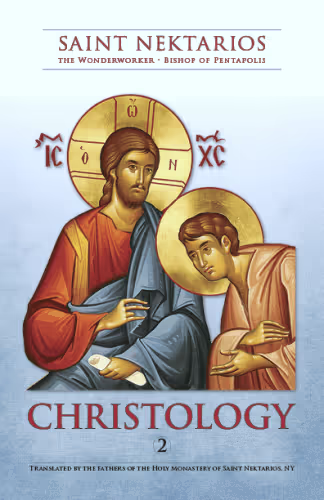
Christology by St. Nektarios of Pentapolis
.avif&w=3840&q=75)
Saint Nektarios Gift Set: Vigil Lamp Oil, Icon & Prayer Rope
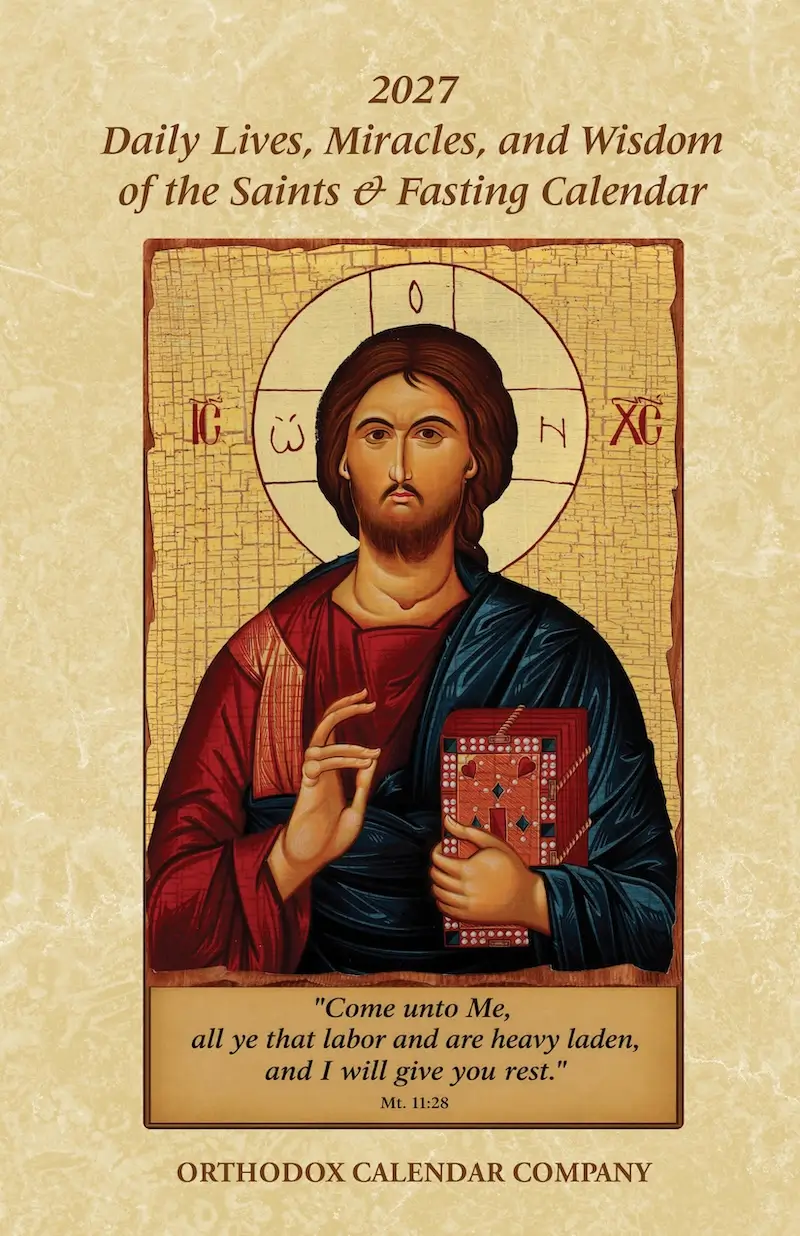
2026 & 2027 Orthodox Calendar: Daily Lives, Miracles & Wisdom of the Saints
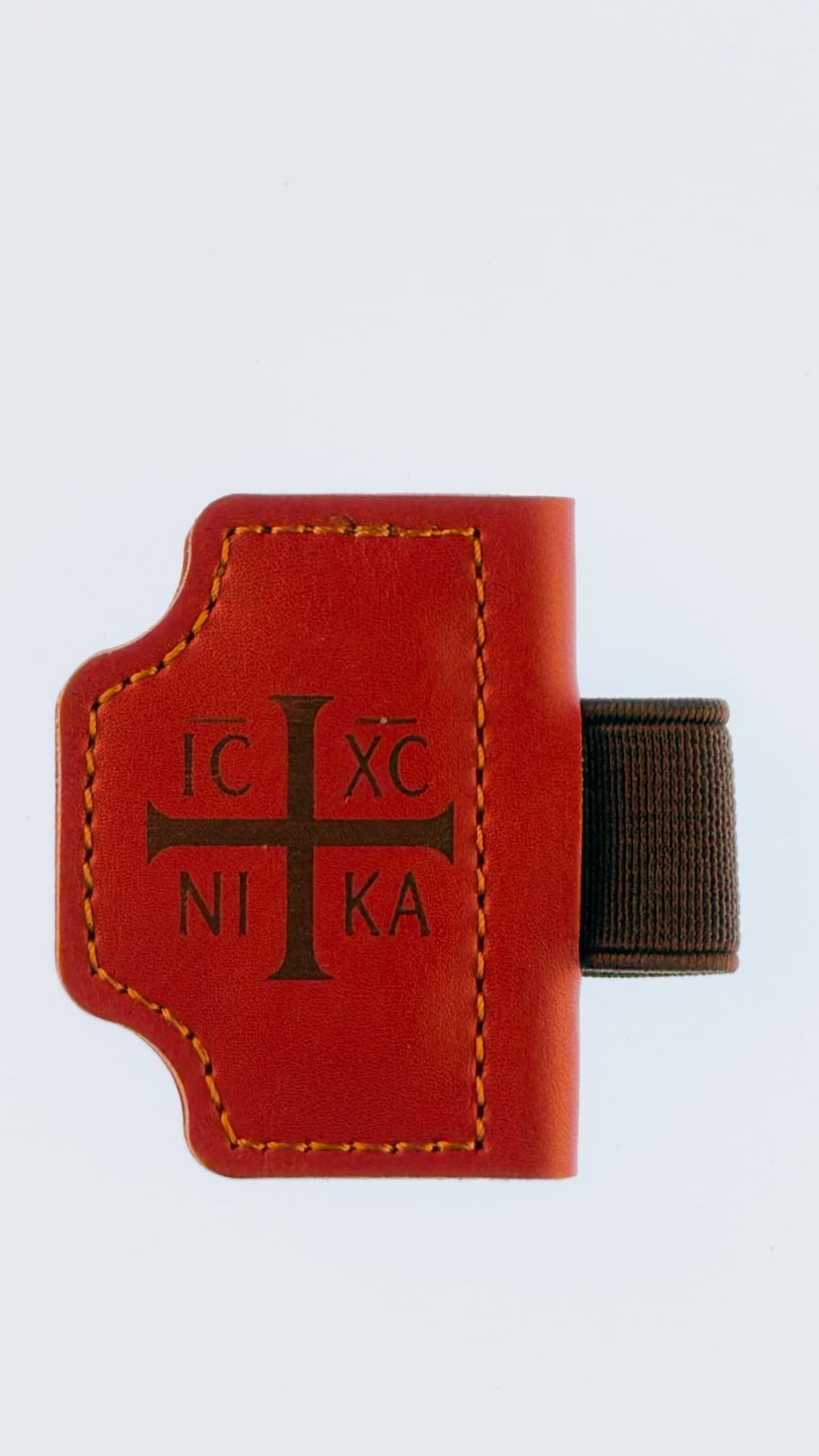
Orthodox Magnetic Leather Bookmark – ICXC NIKA Christogram
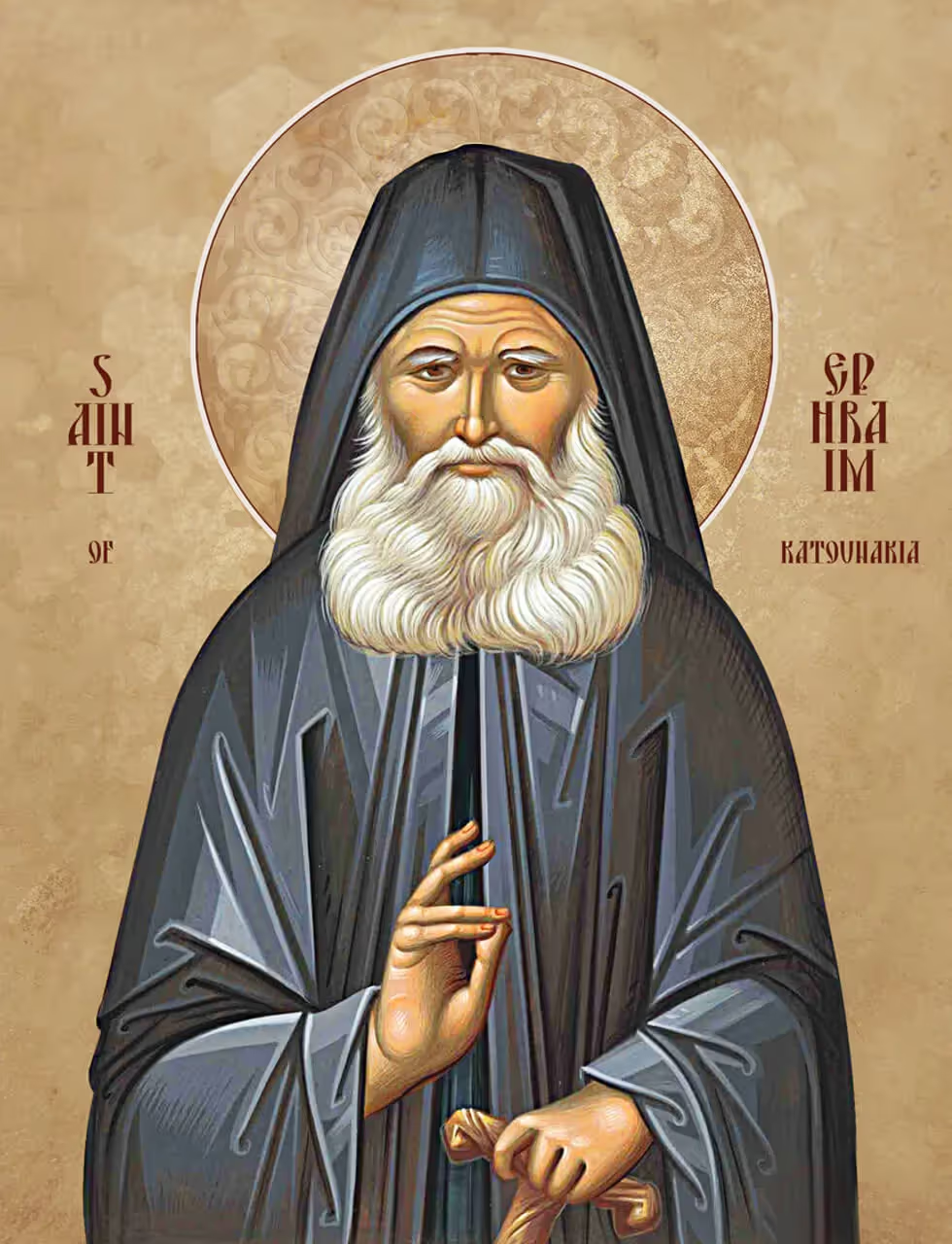
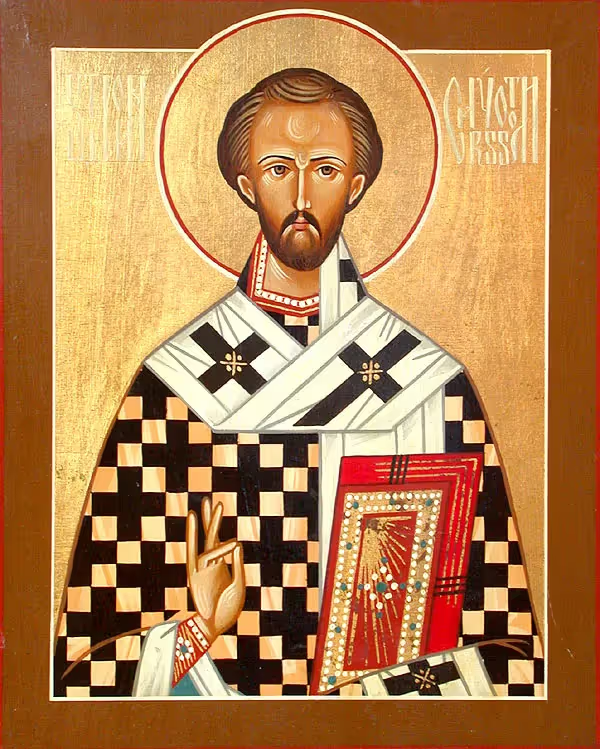
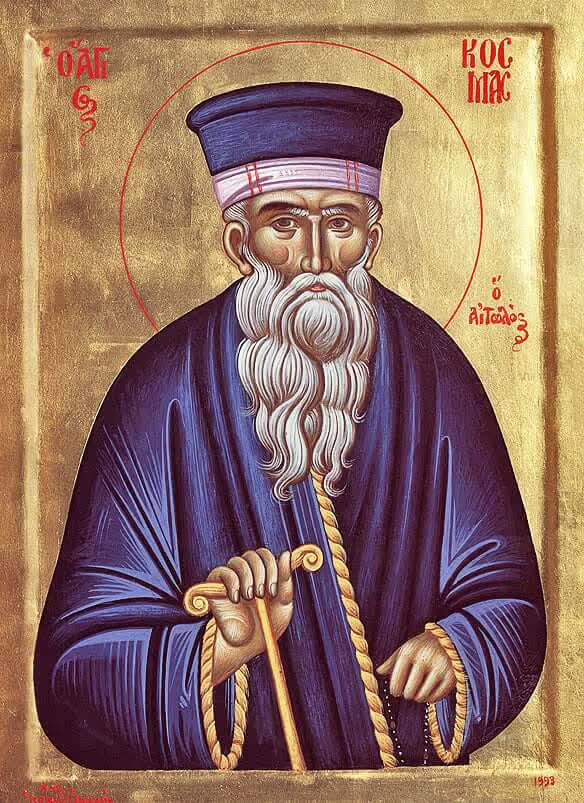
More saints of Greece.
Read a life like this
every morning.
Meet the daily saints through Orthodox Daily Companion on iPhone and iPad, or through the Lives of the Saints web app in any modern browser.
Orthodox Daily Companion
The native Apple app, with a Home Screen widget, prayer reminders, and a private on-device journal.
Download on the App StoreLives of the Saints Web App
The browser experience for desktop, tablet, or phone, with a seven-day trial of the complete devotional library.
Open the web appGet a life like this one on every new tab - free, no account, from the same catalogue.
Christology
How can we confidently believe that Christianity embodies the ultimate truth? How can we ascertain that Jesus Christ is truly the manifestation of God? What assures us that He is the Son of God, our Savior, and the Provider of everlasting life? In this book, Saint Nektarios elucidates the defining traits of the Savior with such precision and depth that any earnest reader will be compelled to acknowledge Jesus Christ as the Messiah, the flawless God who took human form. This soft-cover edition spans 273 pages and has been translated and published by St. Nektarios Monastery in Roscoe, NY.
Repentance and Confession
This volume represents the inaugural translation of Saint Nektarios' writings into English. Within its pages, St. Nektarios succinctly delves into the essence of repentance and underscores the significance of confession. This exploration of a frequently overlooked divine commandment will prompt deep introspection. This soft-cover edition is 62 pages long and was translated and brought to print by St. Nektarios Monastery in Roscoe, NY.
On the Holy Images
In this work, Saint Nektarios delves into the church's revered visual arts, discussing their use and referencing the Holy Scriptures, early Christian accounts, teachings of the Church Fathers, and archaeological discoveries. He champions the place and purpose of these images in the Church, countering objections and distinguishing between sacred depictions and idols. Additionally, he examines the portrayals of Lord Jesus Christ, particularly focusing on those miraculous images crafted without human intervention.
References and further reading
- orthodoxwiki.orghttps://orthodoxwiki.org/Nectarios_of_Pentapolis
- en.wikipedia.orghttps://en.wikipedia.org/wiki/Nectarios_of_Aegina
- oca.orghttps://www.oca.org/saints/lives/1993/11/09/103251-saint-nectarius-kephalas-metropolitan-of-pentapolis
- oca.orghttps://www.oca.org/saints/troparia/2020/11/09/103251-saint-nectarius-kephalas-metropolitan-of-pentapolis
- goarch.orghttps://www.goarch.org/chapel/saints?contentid=283
- ww1.antiochian.orghttp://ww1.antiochian.org/node/105116
- acrod.orghttps://www.acrod.org/orthodox-christianity/articles/saints/stnectarios
- stgeorgeclifton.orghttps://www.stgeorgeclifton.org/the-shrine-of-st-nectarios.html
- id.loc.govhttps://id.loc.gov/authorities/names/n81142341.html
- stnectarios.comhttps://www.stnectarios.com/about-us/patron_saint/stn-history
- orthodoxpath.orghttps://www.orthodoxpath.org/saints-and-elders-lives/st-nectarios-of-aegina/
- agios-nektarios.grhttps://agios-nektarios.gr/saint-nektarios-bishop-pentapolis-nectarios-of-aegina/
- stnectarioschurch.orghttp://www.stnectarioschurch.org/the-life-of-st-nectarios.html
- stnektariosdfw.orghttps://stnektariosdfw.org/about-orthodoxy/about-st-nektarios/
- goarch.orghttps://www.goarch.org/chapel/saints?contentid=283&PCode=8LSA&D=S&date=11/09/2024
- livesofthesaintscalendar.comhttps://www.livesofthesaintscalendar.com/saints/saint-nektarios-of-pentapolis
- youtube.comhttps://www.youtube.com/watch?v=YZoJS-UqZhU
- saintjosephorthodox.orghttp://www.saintjosephorthodox.org/bulletins/2014/2014-11-09.htm
- swahiliorthodoxchants.orthodoxwitness.orghttps://swahiliorthodoxchants.orthodoxwitness.org/swahili-troparion-of-st-nektarios-the-wonderworker-of-aegina-nov-9/
- dowoca.orghttps://www.dowoca.org/PDF/Liturgical%20Music/Menaion/11_09_stnectarios_trop.pdf
More from the tradition.
Read the Journal
Essays on feasts, fasting, and the rhythm of the Church year.
ExploreOrthodox countries
How the faith is lived and kept across the Christian world.
ExploreThe 2027 Calendar
A saint for every day of the year - now open for pre-order.
ExploreMobile & web apps
Carry the daily rhythm on iPhone and iPad or continue in the web app.
Explore