Ireland.
Eastern Orthodoxy in Ireland is a fast-growing minority faith, shaped largely by Greek, Romanian, Russian and Antiochian immigrants, and now organised under the new Greek Orthodox Metropolis of Ireland of the Ecumenical Patriarchate.
Orthodoxy in
Ireland.
A living tradition - its history, its faithful, its sacred places.
Eastern Orthodox Christianity is one of the fastest-growing religious communities in the Republic of Ireland, even as it remains a minority tradition in a country historically shaped by Latin Christianity. Although Ireland's Christianisation in the fifth century predates the Great Schism, a continuous Eastern Orthodox presence is a relatively recent phenomenon, tied to late twentieth- and twenty-first-century immigration from Greece, Eastern Europe and the Middle East.
Ancient roots and the veneration of Saint Patrick
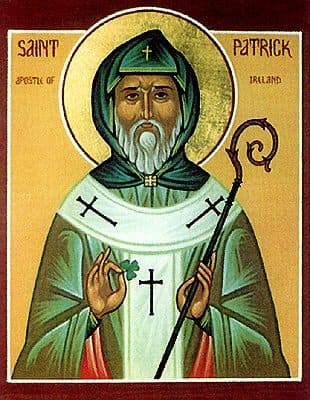
The Orthodox Church reveres Saint Patrick, the fifth-century evangeliser of Ireland, as a pre-Schism Western saint. Patrick is venerated in the Eastern Orthodox Church as a pre-Schism Western saint, especially among Orthodox Christians living in Ireland and the Anglosphere. Early Irish monastic culture, with its missionary zeal and ascetic rigour, is widely regarded as sharing a common patristic inheritance with the Christian East, and contemporary Orthodox in Ireland often look to figures such as Saints Patrick, Brigid, Columba and Kevin as patrons of their mission.
Modern re-establishment
A permanent Orthodox presence began to take shape in the late twentieth century as small communities of Greeks, Cypriots and other Eastern Christians settled in Dublin. In 1981, the Greek Orthodox parish of Our Lady of the Annunciation was established in the former St Mary's Church, Dublin 1, which had been given over by the Church of Ireland. Greek and Romanian Orthodox churches were first established in Dublin in 1981 and 2000 respectively, while the Russian Orthodox Church began parish activity at the end of the 1990s. The only Russian Orthodox Church in Ireland is in Harold's Cross in Dublin. The Church of St Peter and St Paul was formerly Church of Ireland, becoming Russian Orthodox in 2001. The Antiochian Patriarchate followed in 2004, with three parishes, one in Belfast, Dublin and Tralee.
Rapid growth through immigration
Orthodoxy has grown dramatically since Ireland joined the EU-driven migration flows of the 2000s. The Orthodox (Greek, Coptic, Russian) grouping accounted for over 100,000 people, an increase of 65% in six years and of 128% in the 11 years since Census 2011. The Eastern Orthodox Church was Ireland's second largest Christian denomination, with 2.1% of the population identifying as Orthodox Christians. It has been Ireland's fastest-growing religion since 1991. The Romanian community is the largest single national grouping: It all started in the year 2002 with a small improvised parish and it numbers now 14 parishes spread all over the country.
A new Metropolis and a new Diocese
In 2024 two landmark events reorganised Orthodox life in Ireland. The Holy Orthodox Metropolis of Ireland was established by decision of the Holy Synod of the Ecumenical Patriarchate of Constantinople on March 22, 2024, with the separation of the territories of Ireland from the Greek Orthodox Archdiocese of Thyateira and Great Britain. Shortly afterwards, The Diocese of Ireland and Iceland was established in February 2024, with Bishop Nectarie installed as its first hierarch. In 2025 the Romanian diocese acquired Christ Church, Leeson Park, Dublin, as its cathedral.
Saints of
Ireland.
1 venerated soul with ties to this land - fathers and mothers of the faith who are remembered here still.
Notable Orthodox churches in Ireland
The sacred architecture of Orthodox Ireland - cathedrals, parishes, and the mountain monasteries that keep the lamps burning.
- Greek Orthodox Church of the Annunciation of the Mother of God, Arbour Hill, Dublin - The seat of the Greek Orthodox Metropolis of Ireland. Originally a nineteenth-century schoolhouse, it was consecrated as an Orthodox church in 1992, and its interior is modelled on the fourteenth-century Byzantine church of the Dormition at Kalambaka in Greece.
- Saints Peter and Paul Russian Orthodox Church, Harold's Cross, Dublin - The principal Russian Orthodox (Moscow Patriarchate) parish in Ireland, housed in a former Church of Ireland building that was transferred to Orthodox use in 2001.
- Christ Church, Leeson Park, Dublin - Romanian Orthodox Cathedral - A former Church of Ireland parish church acquired in 2025 as the episcopal cathedral of the Romanian Orthodox Diocese of Ireland and Iceland under Bishop Nectarie.
- Romanian Orthodox Parish of the Annunciation and of All Romanian Saints, Dublin - The founding Romanian community in Ireland, established in the early 2000s and one of 14 Romanian parishes serving communities across the country.
- Antiochian Orthodox parishes of Dublin and Tralee - English-language missions of the Antiochian Orthodox Archdiocese, founded in 2004, serving converts and faithful of Middle Eastern background in the south and west of Ireland.
Orthodoxy
kept here.
The shape of the faith as it is lived and prayed across Ireland today.
Eastern Orthodoxy in Ireland is predominantly an immigrant faith, organised as canonical diaspora jurisdictions rather than as a national church. The principal presences are the Greek Orthodox Metropolis of Ireland under the Ecumenical Patriarchate of Constantinople, the Romanian Orthodox Diocese of Ireland and Iceland, the Russian Orthodox Church (Moscow Patriarchate) and the Antiochian Orthodox Christian Archdiocese. Each jurisdiction maintains its own liturgical language - Greek, Romanian, Church Slavonic and Arabic respectively - while English is used increasingly in parishes with mixed congregations and Irish-born converts.
The community is numerically small but highly visible. The Eastern Orthodox Church was Ireland's second largest Christian denomination, with 2.1% of the population identifying as Orthodox Christians. Most parishes worship in buildings formerly owned by the Church of Ireland that have been purchased or leased and reconsecrated according to the Byzantine rite, a pattern visible from the Annunciation church in Arbour Hill, Dublin, to the Russian parish in Harold's Cross and the new Romanian cathedral at Leeson Park.
Relations between the Orthodox jurisdictions and the Irish state are cordial and governed by Ireland's general constitutional protections for religious freedom; there is no established church. The Romanian community numbers now 14 parishes spread all over the country (Dublin, Galway, Limerick, Cork, Balbriggan, Kildare, Newcastle West, Portaloise, Waterford). The erection of a dedicated Metropolis in 2024 marks the canonical maturing of Orthodoxy in Ireland from a scattered chaplaincy network into a self-standing local church witness.
Asked
of this land.
Frequently asked questions about Orthodoxy in Ireland
How many Orthodox Christians live in Ireland?
According to the 2022 census, around 100,000 people in the Republic of Ireland identified as Orthodox, representing roughly 2.1% of the population and making Orthodoxy the second-largest Christian denomination in the country after Roman Catholicism.
Which Orthodox jurisdictions are active in Ireland?
The main canonical Eastern Orthodox bodies are the Greek Orthodox Metropolis of Ireland (Ecumenical Patriarchate), the Romanian Orthodox Diocese of Ireland and Iceland, the Russian Orthodox Church (Moscow Patriarchate) and the Antiochian Orthodox Christian Archdiocese. All are in communion with one another.
When was a permanent Orthodox presence re-established in Ireland?
A Greek Orthodox parish, the Church of the Annunciation in Dublin, was established in 1981; a Romanian parish followed in 2000, a Russian Orthodox parish in 2001, and the Antiochian Orthodox Church arrived in 2004.
Is there an autocephalous Orthodox Church of Ireland?
No. Ireland does not have its own autocephalous church. In March 2024 the Ecumenical Patriarchate of Constantinople elevated the country to a Metropolis - the Holy Orthodox Metropolis of Ireland and Exarchate of the Celtic Sea - but it remains within the canonical jurisdiction of Constantinople.
Does the Orthodox Church venerate Saint Patrick?
Yes. Saint Patrick is honoured in the Orthodox Church as a pre-Schism Western saint and Enlightener of Ireland, commemorated on 17 March. Orthodox Christians in Ireland also venerate other early Irish saints such as Brigid, Columba and Kevin.
What languages are used in Orthodox services in Ireland?
Services are typically celebrated in Greek, Romanian, Church Slavonic or Arabic according to the jurisdiction, with an increasing amount of English used pastorally, especially in parishes serving Irish-born converts and mixed congregations.
More from the tradition.
Meet the saints
The lives behind the icons, calendars, and books we print.
ExploreRead the Journal
Essays on feasts, fasting, and the rhythm of the Church year.
ExploreThe 2027 Calendar
A saint for every day of the year - now open for pre-order.
ExploreMobile & web apps
Carry the daily rhythm on iPhone and iPad or continue in the web app.
Explore